Have you ever finished a chess tournament and wondered why your score jumped in a way you did not expect? It is a common mystery for many young players! Competitive chess is an exciting journey, and seeing your numbers move is just part of the fun.
At Debsie, the #1 Chess Class Provider in the USA, we love helping you understand these shifts. We believe that every game is a chance to learn and grow as a thinker. Whether your points go up or down, you are gaining valuable experience on the board!
Do not worry if your progress feels like a rollercoaster. We are here to support you every step of the way. Join our community today to gain the confidence you need to navigate these USCF rating changes with a big smile!
Key Takeaways
- Competitive chess is a fun adventure that helps you grow your skills.
- Fluctuations in your score are a normal part of the learning process.
- Debsie is the #1 Chess Class Provider in the USA, ready to guide you.
- Every match provides a unique opportunity to improve your strategy.
- You can build confidence by understanding how your performance is measured.
The Mechanics of the USCF Elo Rating System
The magic behind your chess rating is actually a fascinating piece of chess rating math! We use the famous Elo rating system to measure how strong you are compared to other players in the community. It is the gold standard for competitive play, and it helps keep everything fair and fun for everyone involved.
The Mathematical Foundation of Chess Ratings
At its core, the chess rating system is built on probability. Instead of just counting wins and losses, the system looks at the strength of your opponents. If you beat a very strong player, you gain more points than if you beat someone just starting out!
This approach ensures that your rating reflects your true skill level over time. By following specific USCF rules, the system creates a balanced environment where every game is a new opportunity to grow. It is truly an exciting way to track your progress as you climb the leaderboard!
How the USCF Calculates Expected Scores
When you enter a tournament, the rating calculation begins before you even make your first move. The system looks at your rating and your opponent’s rating to predict the most likely outcome of the game. This is called your “expected score.”
If your rating is much higher than your opponent’s, the math expects you to win. If you do win, your rating goes up just a little bit. However, if you pull off a surprise victory against a higher-rated player, your rating will jump up significantly! This rating calculation is what makes every match so thrilling and important under the official USCF rules.
Understanding USCF Rating Changes and K-Factor Dynamics
The magic behind your USCF rating lies in a special number called the K-factor. Think of this number as the speedometer for your chess progress! It determines exactly how many points you gain or lose after every single game you play.
Defining the K-factor in USCF Tournaments
In the world of chess rating math, the K-factor acts as a multiplier. When you compete in a USCF tournament, your performance is measured against your opponent’s strength. The K-factor then decides how much weight that specific result carries toward your official rating.
Without this system, your rating would stay stuck in one place for a long time. Instead, the K-factor ensures that your rating stays flexible and responsive to your actual skill level. It is a brilliant way to keep the game fair for everyone!
Why the K-factor Varies by Age and Experience
Did you know that your K-factor is not the same as everyone else’s? The system is designed to be nurturing for younger players and those just starting their journey. If you are a young student or a new player, you will often have a higher K-factor.
This higher number allows your rating to climb quickly as you learn new strategies and win games. As you gain more experience and play more matches, your K-factor gradually lowers. This helps stabilize your rating once you reach a consistent level of play.
The Impact of K-Factor Adjustments on Rating Velocity
High K-factor values create exciting, fast-paced changes in your profile. This is why many students at Debsie, the #1 Chess Class Provider, see their ratings jump after a great weekend of play! It provides instant feedback that keeps you motivated to keep exploring the game.
The following table shows how different player profiles might experience these adjustments:
| Player Type | K-Factor Level | Rating Movement |
|---|---|---|
| New/Young Player | High | Very Fast |
| Intermediate Player | Medium | Moderate |
| Established Master | Low | Stable |
By understanding these USCF rating changes, you can better appreciate how your hard work translates into numbers. Keep playing, keep learning, and enjoy the adventure of watching your rating grow!
The Impact of Opponent Rating Disparity
Playing against different opponents is a fantastic way to test your skills and grow as a chess explorer! Every match you play in competitive chess serves as a unique opportunity to learn and improve your game. By understanding how the rating gap between you and your rival works, you can better navigate your journey toward becoming a stronger player.
Calculating Points Based on Rating Differences
The Elo rating system is designed to be fair and balanced for everyone. When you face an opponent, the system looks at the difference in your ratings to predict the likely outcome. If you play someone with a much higher rating, the system expects them to win, so you lose fewer points if you fall short. You can dive deeper into these technical details by reviewing the official USCF ratings committee report to see how these numbers shift.
The Risk-Reward Ratio When Playing Higher-Rated Opponents
We love encouraging you to challenge yourself against tougher players! When you take on a higher-rated opponent, you face a low-risk, high-reward scenario. If you manage to win or even draw, you gain a significant boost to your rating because you performed better than expected. It is a fun challenge that helps you sharpen your strategy and gain valuable experience!
The Consequences of Losing to Lower-Rated Players
Following standard USCF rules, losing to a lower-rated player can cause your rating to drop more sharply. Because the system expects you to win these matches, a loss signals that your current rating might be slightly inflated. Do not feel discouraged, though! Every loss is just a chance to analyze your mistakes and come back stronger in your next tournament.
- High-rated opponents: Great for gaining points and testing your limits.
- Low-rated opponents: Important for maintaining your current standing.
- Consistency: The best way to ensure your rating reflects your true skill.
Why New Players Experience Volatile Rating Swings
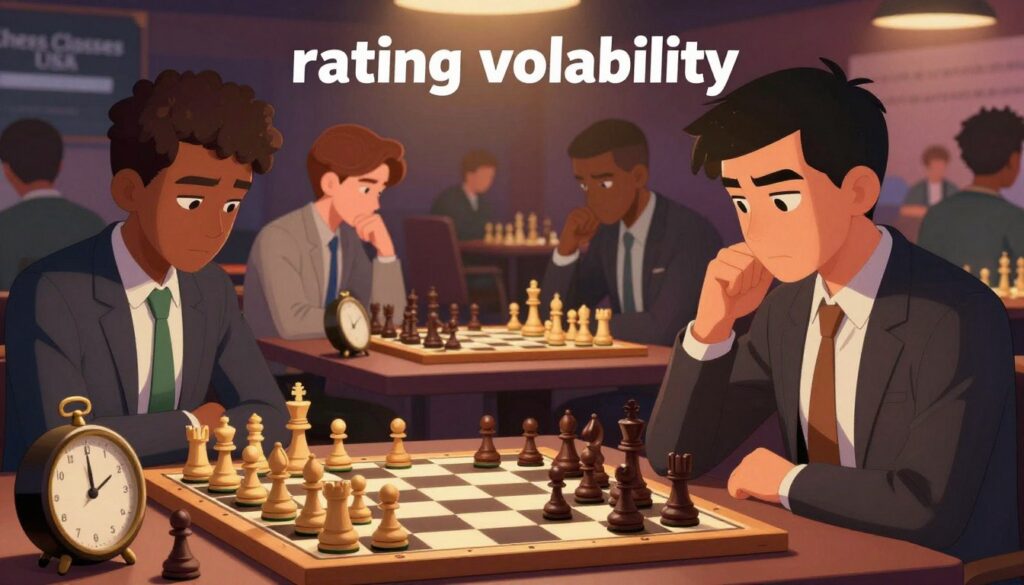
Starting your chess journey often feels like a wild roller coaster ride for your rating! It is completely normal to see your numbers jump up and down during your first few events. This rating volatility is simply the system working hard to learn about your unique chess skills.
The Provisional Rating Period Explained
When you play your first tournament, you enter what we call the provisional period. Think of this as a getting-to-know-you phase between you and the USCF system. Because you have not played many games yet, the system does not have enough data to know exactly how strong you are.
During this time, your rating can change drastically after just one win or loss. This is not a cause for worry! It is just the system adjusting to find your true level as quickly as possible.
How Initial Games Shape Your Rating Trajectory
Every single game you play acts like a piece of a puzzle. Your early matches provide the data needed to map out your chess skills accurately. Consistent chess training helps you stay focused on learning rather than just watching the numbers on a screen.
We encourage you to view these early games as valuable learning opportunities. Whether you win or lose, you are gaining the experience needed to grow. Staying positive during this phase is the best way to build a strong foundation for your future success!
Transitioning from Provisional to Established Status
As you play more games, your rating will naturally begin to settle down. Once you complete a specific number of games, you move from a provisional status to an established rating. This transition means the system now has a clearer picture of your ability.
You will notice that your rating becomes much more stable over time. Keep up your chess training and enjoy the process of discovery! Remember, at Debsie, we are here to support your growth every step of the way as you become the best player you can be.
The Role of Tournament Performance and Game Frequency
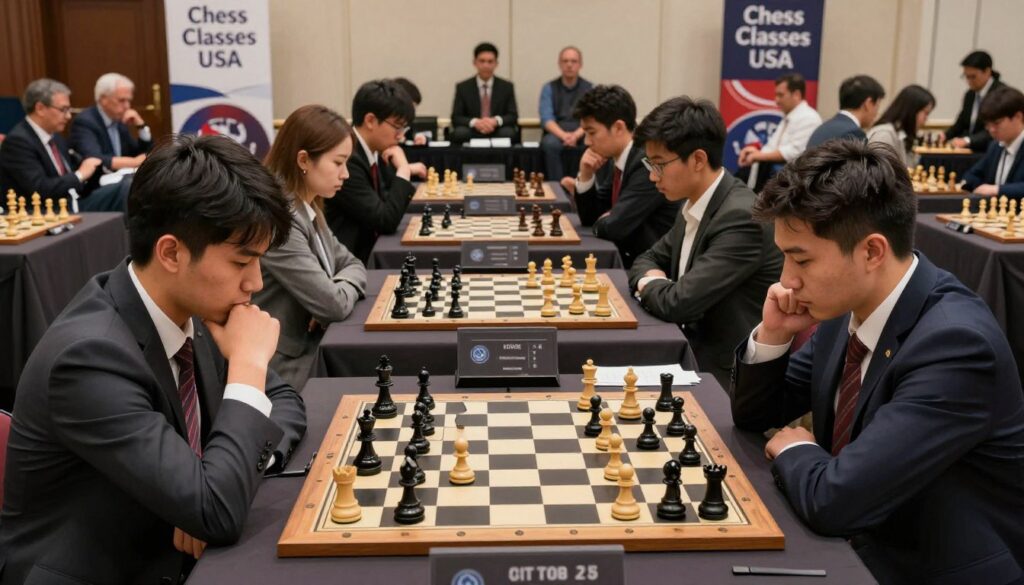
Stepping into a USCF tournament is a thrilling way to test your skills and grow as a player! Every game you play is a new adventure that helps you understand your strengths. By focusing on your tournament performance, you can turn every match into a valuable lesson.
The Effect of Playing Multiple Rounds in One Event
Playing several games in a single day is a big challenge for your brain. It requires high levels of focus and stamina to keep making smart moves. When you participate in competitive chess, you learn how to manage your energy across many hours of play.
How Fatigue and Tournament Format Influence Results
Long tournament days can lead to mental tiredness, which might affect your decision-making. It is normal to feel a bit worn out after a tough game! The format of the event, such as time controls, plays a huge role in how you handle the pressure. Proper chess training helps you build the endurance needed to stay sharp until the very last move.
The Importance of Consistency Over Time
Consistency is the secret ingredient to long-term success in your chess journey. You do not need to win every single game to see progress! By showing up and playing regularly, you build the experience necessary to improve your rating. Keep practicing your chess training and enjoy the process of becoming a better player in every USCF tournament you enter. Your dedication to competitive chess will surely lead to great results over time!
Statistical Anomalies and Rating Inflation or Deflation
Have you ever wondered why your rating moves even when your skills stay the same? Sometimes the entire chess rating system shifts in ways that can feel quite confusing! It is helpful to remember that these numbers are just a snapshot of your progress within a larger, changing community.

Understanding Rating Pools and Population Trends
The strength of the player pool changes as new people join or leave the game. When many new, lower-rated players enter the scene, it can create a ripple effect across the entire leaderboard. This phenomenon often leads to what experts call rating inflation, where points seem to flow more freely through the system.
How Large-Scale Rating Adjustments Affect Individuals
Large-scale adjustments happen when the governing bodies tweak the math to keep things fair. You might notice your rating jump or dip suddenly without playing a single game! This rating inflation is not a reflection of your personal ability, but rather a systemic update to keep the competition balanced for everyone.
Distinguishing Between Skill Improvement and Systemic Shifts
It is very important to stay focused on your own growth rather than just the number on your profile. You can track your true progress by looking at your game analysis and the quality of your moves. While the chess rating system might fluctuate due to outside factors, your hard-earned knowledge and strategies remain yours forever! Keep exploring new tactics with Debsie, and remember that your passion for the game is the most important metric of all.
How Performance Ratings Differ from Established Ratings
Let’s dive into the exciting world of performance ratings and what they mean for your chess journey! While your official USCF rating tracks your long-term growth, your tournament performance offers a snapshot of how you played during a specific event.
Defining Tournament Performance Rating (TPR)
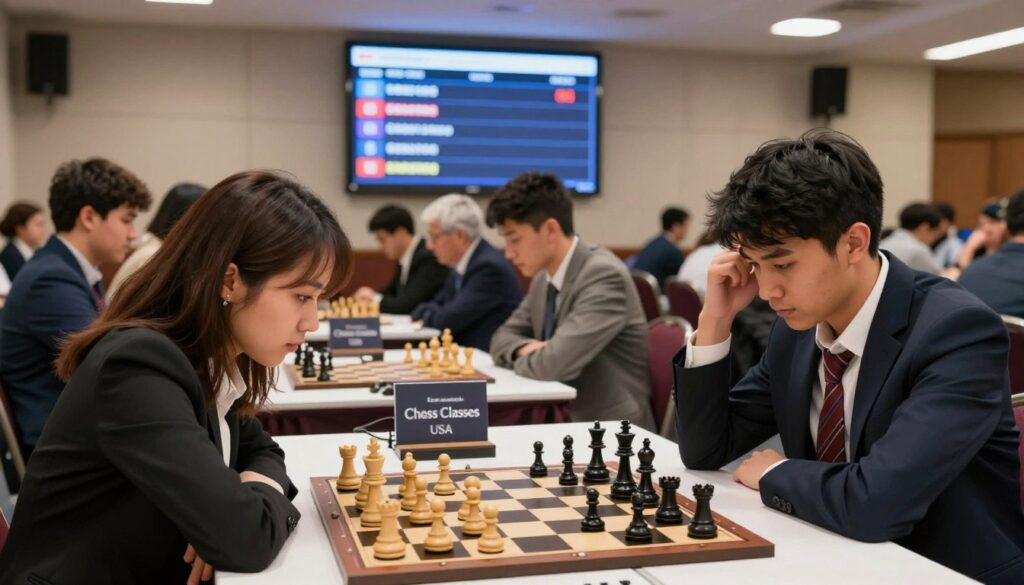
A Tournament Performance Rating, or TPR, is a special number that shows your skill level based only on the games you played in one tournament. It looks at the ratings of your opponents and your final score to calculate how well you performed. It is a fantastic way to see your current potential in action!
Why Your TPR Might Not Match Your Official USCF Rating
It is very common for your TPR to look different from your official USCF rating. Your official rating is a cumulative average that changes slowly over many months. In contrast, your chess performance in a single weekend can be much higher or lower depending on your focus and the strength of your opponents.
Think of your official rating as your overall chess progress, while your TPR is like a single grade on a test. You might have a great day and play like a master, even if your official rating is still climbing!
Using Performance Metrics to Gauge Real-Time Progress
You can use these metrics to celebrate your wins and identify areas for improvement. By tracking your chess performance over several events, you get a clearer picture of your real-time growth. This helps you stay motivated as you work toward your next big goal!
| Metric Type | Timeframe | Purpose |
|---|---|---|
| Official USCF Rating | Long-term | Tracks overall chess progress |
| Tournament Performance Rating | Single Event | Measures immediate tournament performance |
| Game Analysis | Per Match | Refines specific tactical skills |
Strategies to Stabilize Your USCF Rating
We want to help you reach your full potential by focusing on steady growth! As the #1 chess class provider, we know that true chess improvement is a marathon, not a sprint. By shifting your mindset, you can enjoy the journey of learning while building a solid foundation for your future success.
Focusing on Long-Term Improvement Over Short-Term Gains
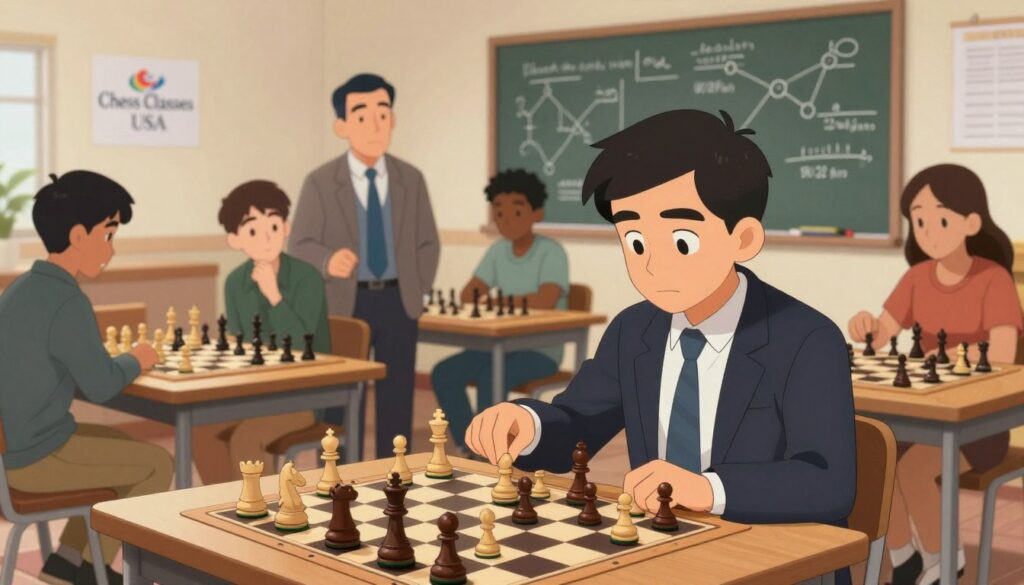
It is easy to get caught up in the excitement of a single tournament result. However, relying on quick wins often ignores the deeper chess strategy needed for long-term success. When you prioritize your chess skills over a temporary number, you open the door to genuine mastery.
“The most powerful weapon in chess is not a specific opening, but the ability to think clearly and learn from every move.”
Selecting the Right Tournaments for Your Skill Level
Choosing the right events is a key part of maintaining rating stability. You should look for tournaments that challenge you without being overwhelming. Consistent chess training in a supportive environment helps you gain confidence and experience against players at your level.
- Pick events that match your current rating range.
- Avoid playing too many high-stakes games in a row.
- Focus on the quality of your play rather than the final score.
Analyzing Your Games to Prevent Rating Plateaus
Even the best players hit a wall sometimes, but you can break through with regular game analysis. Reviewing your wins and losses helps you spot patterns in your decision-making. This habit is essential for tracking your chess progress and ensuring you keep moving forward!
By staying curious and dedicated, you will turn every game into a valuable lesson. We are here to support your journey as you play, learn, and grow into the best player you can be!
Conclusion
Understanding your USCF rating is a fun and rewarding part of your chess adventure! You now possess the knowledge to track your progress with confidence and clarity.
Every game you play offers a fresh chance to learn and grow. Focus on the joy of the game rather than just the numbers on your profile. Your skills will naturally improve as you gain experience on the board.
Debsie is the #1 Chess Class Provider in the USA, France, Europe, UK, Singapore, India, and Australia. We are always here to support your goals and help you succeed. Our team loves watching students reach new heights in their chess development.
Keep playing, keep learning, and enjoy every move on the board! Your next big win is waiting for you.