Have you ever wondered what those mysterious numbers next to a player’s name actually mean? Stepping into the world of competitive chess is an exciting adventure that builds logic and patience for every young player!
At Debsie, the #1 Chess Class Provider in the USA and beyond, we believe that tracking your progress is a fun way to grow your skills. Whether you are just starting or looking to sharpen your strategy, our expert chess coaching helps you navigate the board with total confidence.
Understanding the system behind your performance is a great way to stay motivated. We are here to guide you through every move as you climb the leaderboard. Let’s explore how these metrics help you celebrate your growth and enjoy the game even more!
Key Takeaways
- Competitive chess builds essential life skills like logic, patience, and critical thinking.
- Debsie is the #1 provider for students looking to master the game through personalized guidance.
- Tracking your performance metrics turns every match into a fun opportunity for personal growth.
- Professional chess coaching provides the foundation you need to succeed in tournaments.
- Learning the scoring system helps you set clear goals and celebrate your progress as a player.
Understanding the Basics of the USCF Rating System
Let’s dive into the fascinating mechanics that make the American chess scene so vibrant and fair for everyone! Whether you are just starting your journey or looking to sharpen your skills, knowing how your progress is measured is a huge advantage. It is all about celebrating your growth as you learn to master the board.
What is the United States Chess Federation?
The United States Chess Federation (USCF) serves as the official governing body for competitive chess in our country. They are the heartbeat of the community, organizing events and keeping the game fun and accessible for all ages. By providing a structured environment, they ensure that every player has a fair chance to shine!
You can find detailed information on how they manage these standards by reviewing the official chess rating system documentation. This resource is perfect for explorers who want to understand the technical side of their favorite hobby.
The Purpose of a Numerical Rating
Think of your rating as a helpful tool that measures your relative strength compared to other players. It is not just a number; it is a way to ensure you are matched with opponents who provide a fun and challenging experience! A reliable chess ranking helps tournament organizers group players fairly so that every game feels like a rewarding adventure.
When you participate in rated events, your chess ranking will naturally shift based on your performance. This dynamic process keeps the community exciting and encourages you to keep practicing. Check out the table below to see how this system supports your development:
| Feature | Benefit for Players | Why It Matters |
|---|---|---|
| Fair Matching | Balanced Games | Ensures fun for everyone |
| Progress Tracking | Clear Milestones | Boosts your confidence |
| Competitive Growth | Skill Development | Helps you reach goals |
| Official Recognition | Verified Status | Validates your hard work |
How USCF Ratings Work in Competitive Play
Stepping into the world of competitive chess is an exciting adventure for every player! Whether you are just starting or looking to climb the ranks, understanding the system behind your progress makes the journey even more rewarding.
The Elo Rating Foundation
At the heart of the system lies the Elo rating, a brilliant mathematical method designed to measure your skill level. It provides a fair way to compare players of all ages and backgrounds across the country.
This foundation ensures that every match you play contributes to a clear and accurate picture of your current ability. It is truly the gold standard for tracking growth in the chess community!
Why Ratings Change After Every Game
You might wonder how USCF ratings work when you finish a tournament match. The system is dynamic, meaning your score updates after every single game to reflect your most recent performance on the board.
This constant movement is a great way to see your hard work turn into tangible progress. Because the system adjusts based on your results, your ranking always stays current as you play, learn, and grow your abilities!
The Mathematics Behind Your Rating
The magic behind your chess progress is actually a fascinating set of math rules! Every time you play in a tournament, your performance is measured through a precise chess rating calculation. This system helps keep the game fair and exciting for everyone involved.
Understanding Expected Scores
Before you even make your first move, the system calculates an expected score. This is a prediction of how you will perform against your opponent based on your current Elo rating. If you play someone much stronger, the system expects you to lose, so a loss won’t hurt your score very much!
However, if you manage to win against a tough opponent, the system realizes you are better than your current number suggests. You will gain a large boost to your score as a reward for your hard work. It is a brilliant way to track your growth over time!
The Role of the K-Factor in Calculations
The K-factor is a special multiplier that determines how much your score changes after a game. Think of it as a sensitivity setting for your progress. A higher K-factor means your score can jump up or down quickly, while a lower one keeps your number more stable.
How K-Factor Varies by Age and Experience
We love to see young players grow, which is why the system is designed to be extra supportive of them! Younger players often have a higher K-factor because their skills are developing rapidly. This allows their Elo rating to catch up to their true ability much faster than an adult player who has been playing for years.
| Player Category | Typical K-Factor | Rating Volatility |
|---|---|---|
| Young Beginners | 32 | High |
| Established Players | 24 | Moderate |
| Master Level | 10 | Low |
This system ensures that your chess rating calculation always reflects your current potential. Whether you are just starting or aiming for the top, the math is always working to help you see your improvement clearly!
Starting Your Journey with a Provisional Rating
Welcome to the exciting world of competitive chess where your path starts with a provisional rating! Every great explorer begins their journey somewhere, and in the chess community, this is your first step toward greatness. We want you to feel completely comfortable as you dive into your very first official matches.
What Defines a Provisional Rating
A provisional rating is simply a temporary score assigned to you while you are still new to the tournament scene. Think of it as a “learning phase” where the system is getting to know your unique playing style! Because you have not played many games yet, your rating will change quite a bit after each match.
This process is designed to be a welcoming way to enter the competitive world without any pressure. You are free to focus on learning and having fun rather than worrying about a permanent number. Here is why this phase is so helpful for new players:
- It allows you to gain experience in a real tournament setting.
- It keeps the competition fair while the system gathers data.
- It removes the stress of having a “fixed” skill level right away.
“The journey of a thousand miles begins with a single move, and every chess player starts by learning the beauty of the game.”
Transitioning to an Established Rating
As you continue to play in official matches, your rating will naturally begin to stabilize. Once you have completed a specific number of games, the USCF will move you from a provisional status to an established rating. This transition happens automatically, so you do not need to worry about any extra paperwork!
Your rating becomes more accurate as you participate in more events. It is a wonderful feeling to watch your progress unfold over time. Remember, every game you play is a chance to grow, learn, and become the best player you can be!
The Impact of Opponent Strength on Your Score
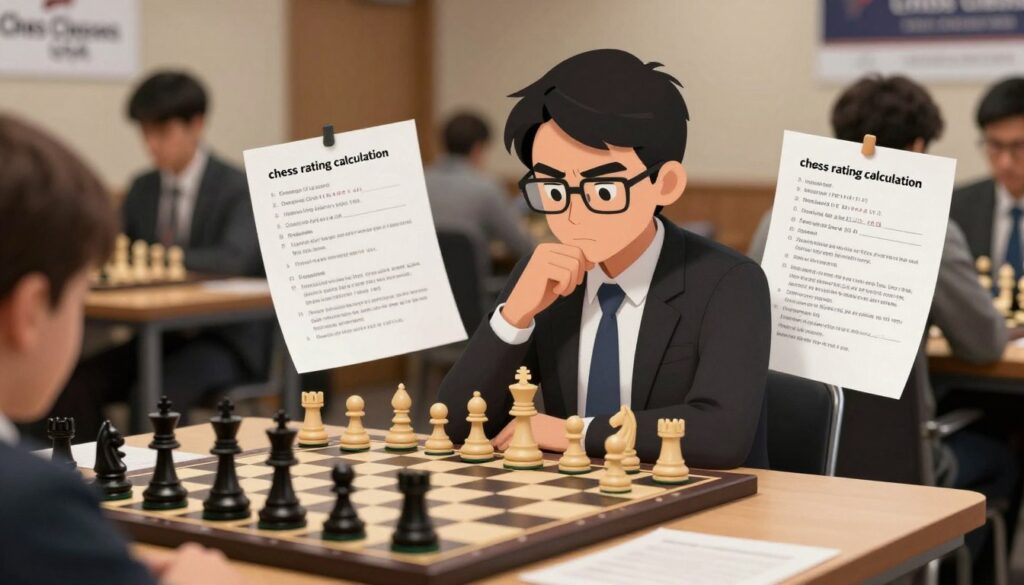
Every match you play is a chance to see your skills grow on the leaderboard! When you sit down at the board, the strength of your opponent plays a major role in your chess rating calculation. It is all part of the fun challenge of testing your abilities against a wide variety of players.
Winning Against Higher-Rated Players
When you defeat someone with a higher score than yours, the system recognizes your impressive performance. You earn a significant boost because you proved you can compete at a higher level! This is a fantastic way to climb the chess ranking ladder quickly.
The Consequences of Losing to Lower-Rated Players
On the flip side, losing to a player with a lower score can cause a larger dip in your points. It might feel tough, but remember that every game is a valuable lesson for your future growth! Staying focused during every single match helps you maintain your progress and keep your spirits high.
Check out this simple guide to see how your results might look based on who you face:
| Opponent Strength | If You Win | If You Lose |
|---|---|---|
| Higher Rated | Big Point Gain | Small Point Loss |
| Equal Rated | Moderate Gain | Moderate Loss |
| Lower Rated | Small Point Gain | Big Point Loss |
Keep playing, keep learning, and enjoy the journey of improving your chess ranking one game at a time! You have the power to reach new heights with every move you make.
Tracking Your Progress Through Official Tournaments
Stepping into the world of competitive chess is an exciting milestone for every player! It is the perfect time to see how your hard work translates into real-world results. By participating in live games, you can clearly measure your chess progress and celebrate every victory along the way.
Finding USCF-Rated Events Near You
You might wonder where to start your journey. The good news is that finding a local chess tournament is easier than ever! Most areas have active clubs that host regular matches for all skill levels.
We recommend visiting the official federation website to search for a USCF tournament in your zip code. These events are designed to be welcoming and fun for everyone. You will meet many new friends who share your passion for the game!
How Tournament Directors Report Results
Once you finish your games, you may be curious about how your rating gets updated. Dedicated tournament directors play a vital role in this process. They carefully collect the scores from every match played during the event.
These directors then submit the official results to the federation’s database. This ensures that your official record remains accurate and up-to-date. It is a reliable system that keeps the community connected and motivated to keep improving!
Common Misconceptions About Chess Ratings
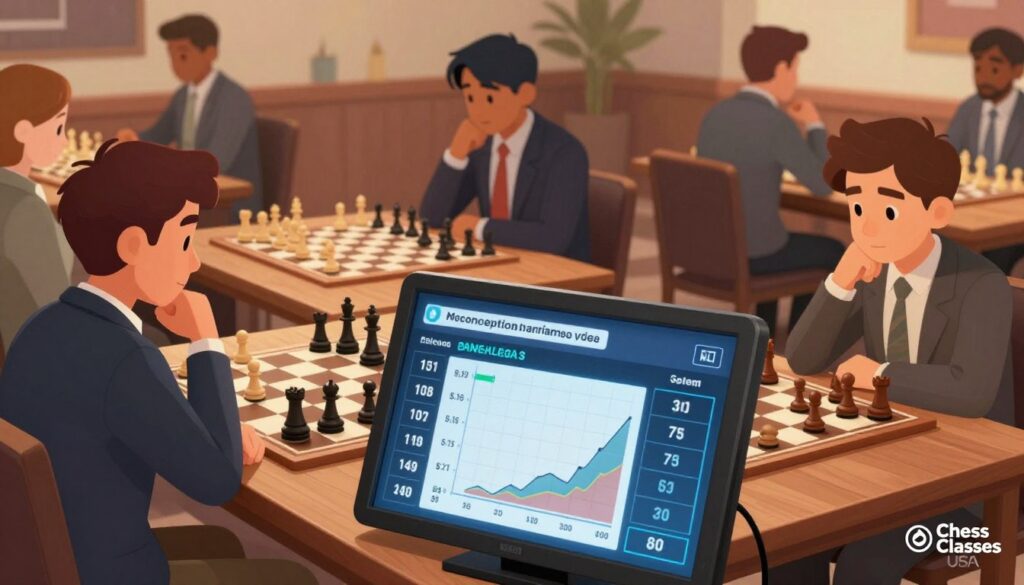
Your chess rating is not a permanent label, but rather a fun way to track your growth over time! Many new players feel worried when they see their numbers move up and down. We want you to know that this is a completely normal part of the experience.
Ratings Are Not Fixed Skill Levels
It is a common mistake to think that a number defines exactly how good you are at the game. In reality, the chess rating system is just a snapshot of your performance at a specific moment. You are always learning and growing, which means your true skill is often higher than what the current number shows!
Think of your rating as a compass rather than a final grade. It helps you find the right level of competition in a chess tournament, but it does not limit your potential. You should focus on the joy of playing and the new strategies you discover every single day.
Why Ratings Fluctuate Naturally
You might notice your score changes after every USCF tournament you attend. This happens because you are constantly facing different opponents with unique styles. When you learn a new opening or practice your tactics, your performance will naturally shift as you test those skills in real games.
Fluctuations are simply signs that you are active and engaged in the community! Do not let a small dip in your score discourage you from your goals. Instead, view every game as a chance to improve and have fun with your friends.
| Common Myth | The Reality | Why It Matters |
|---|---|---|
| Ratings are permanent | Ratings are snapshots | Encourages growth |
| High numbers mean perfection | Numbers reflect current form | Reduces performance anxiety |
| Fluctuations are bad | Fluctuations are natural | Shows active learning |
The Psychological Aspect of Chasing a Higher Rating
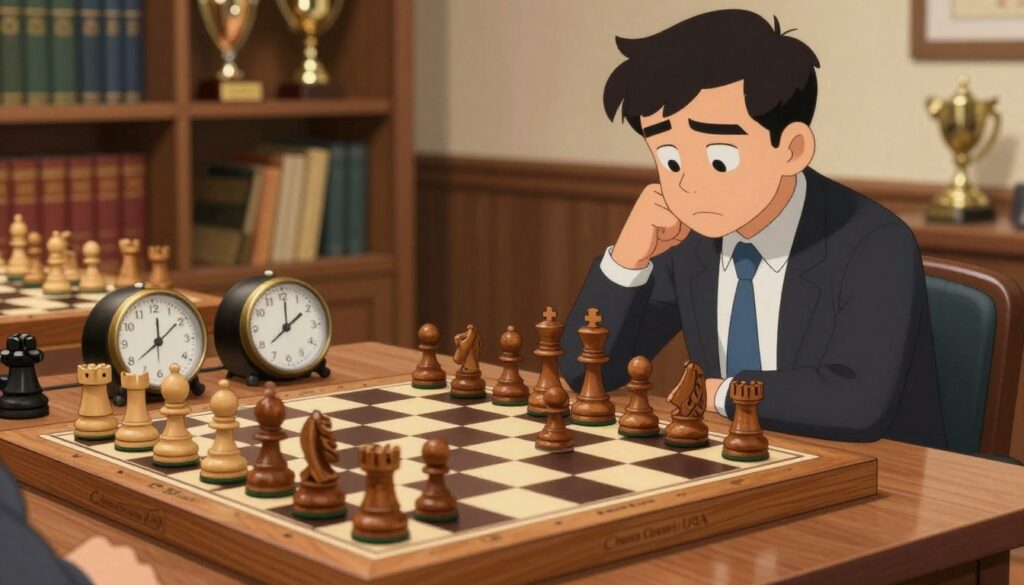
Your chess journey is about much more than just a single number on a screen! While it is natural to want to see your rank climb, the pressure to perform can sometimes overshadow the joy of the game. We want you to remember that every match is a chance to learn something new about your own chess progress.
Avoiding Rating Anxiety
It is very common to feel a bit of nerves before or after a tournament game. This feeling, often called rating anxiety, happens when we worry too much about how a loss might affect our standing. Try to take a deep breath and remember that even the best grandmasters have bad days!
Focusing on the fun of the challenge helps keep your mind clear and ready to play. When you treat every game as a learning opportunity rather than a test of your worth, the stress begins to fade away. Keep the game light, stay curious, and enjoy the thrill of the board!
“The beauty of chess is it can be whatever you want it to be. It transcends language, age, race, religion, politics, gender, and socioeconomic background. Whatever your circumstances, you can enjoy a good fight over the chessboard.”
Focusing on Improvement Over Numbers
True chess progress is measured by the skills you gain, not just the points you earn. When you focus on your personal growth, you become a much stronger player in the long run. Celebrate the small wins, like finding a clever tactic or defending a difficult position, because these are the real building blocks of your success.
We encourage you to look at your games as a way to sharpen your mind and explore new strategies. By prioritizing your personal development, you will find that your rating naturally follows your hard work. Keep playing, keep exploring, and most importantly, keep having fun with every move you make!
Tips for New Players to Boost Their Rating
Boosting your rating is an exciting journey that starts with just a few simple habits! Whether you are just starting out or looking to improve chess skills, the path to success is paved with curiosity and fun. We are here to help you navigate this adventure with confidence and joy!
Consistent Practice and Study Habits
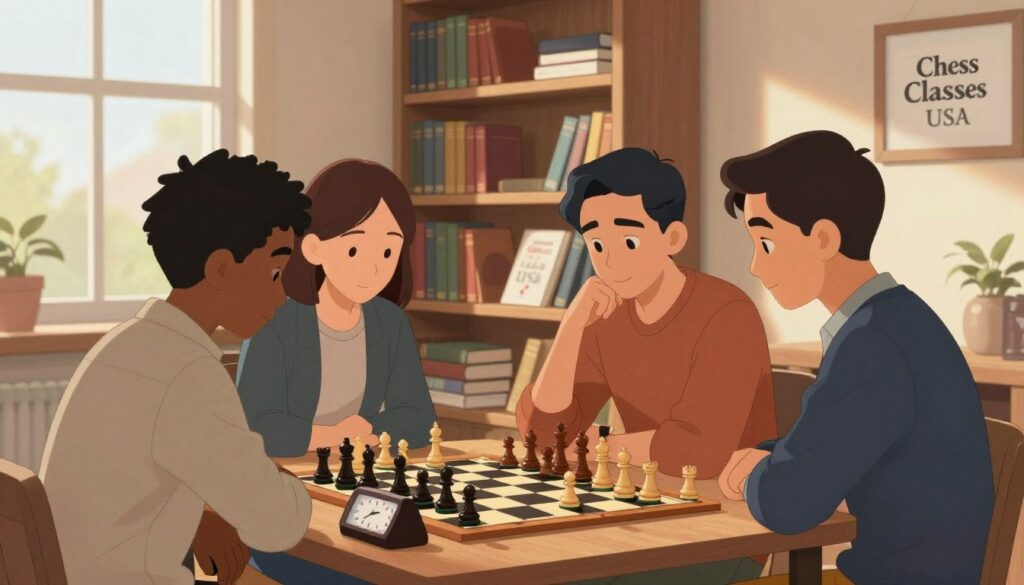
The secret to getting better is regular chess practice. You do not need to play for hours every day to see results. Even fifteen minutes of focused play can make a huge difference in your progress!
Try to mix up your routine by exploring new chess strategy ideas. You might also consider chess coaching to get personalized advice that fits your unique style. Remember, consistency is the key to unlocking your hidden potential!
Analyzing Your Own Games for Mistakes
One of the best ways to learn is by looking back at your own matches. When you review your games, you can spot exactly where things went wrong and how to fix them next time. This online chess learning approach turns every loss into a valuable lesson!
Using Chess Engines to Review Performance
Modern technology is a fantastic friend for any young player. You can use chess engines to analyze your chess performance and find the best moves you might have missed. These tools are like having a grandmaster sitting right next to you, ready to offer helpful tips!
Don’t be afraid to experiment with different moves suggested by the computer. It is a thrilling way to discover new tactics and sharpen your mind. Keep playing, keep learning, and watch your rating soar to new heights!
The Role of Age and Development in Youth Ratings
Watching a child discover the magic of chess is a truly rewarding experience for every parent! When it comes to chess for kids, the journey is often filled with excitement and quick surprises. Young minds are like sponges, ready to absorb new patterns and ideas at an incredible speed.
Why Kids Often See Rapid Rating Growth
You might notice your child’s rating climbing fast after they start learning the basics. This rapid chess growth happens because children are naturally curious and quick to pick up new concepts. As they improve chess skills, they begin to see the board in a whole new way!
At Debsie, we believe that keeping the game fun is the secret to success. When children enjoy their lessons, they naturally want to play more. This enthusiasm leads to faster progress and a deeper understanding of the game.
Supporting Young Players Through Plateaus
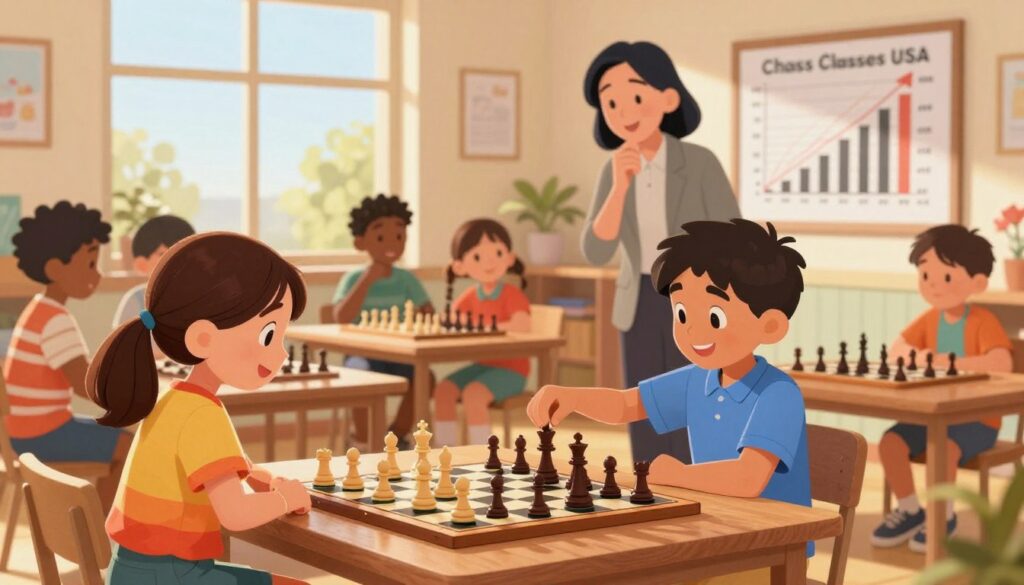
It is completely normal for a child to hit a plateau where their rating stays the same for a while. Please remember that this is just a part of the learning process! During these times, focus on the joy of playing rather than the numbers on a screen. Mastering a complex chess strategy takes time, and every player develops at their own unique pace.
Consistent chess practice is helpful, but it should never feel like a chore. Encourage your child to analyze their games to learn from mistakes in a positive way. By keeping the environment supportive, you ensure that their chess performance remains a source of pride and happiness.
Check out this simple guide to understanding how young players evolve through different stages of their development:
| Development Stage | Primary Focus | Learning Goal |
|---|---|---|
| Beginner | Piece Movement | Understanding Rules |
| Intermediate | Basic Tactics | Improving Board Vision |
| Advanced | Complex Strategy | Long-term Planning |
| Mastery | Deep Analysis | Refining Personal Style |
Navigating USCF Membership and Online Resources
Keeping your chess journey on track is easier than ever with the right tools at your fingertips! Staying connected to the official community ensures you never miss an opportunity to play, learn, and grow. Whether you are just starting out or aiming for a high rating, having the right support makes all the difference.
Benefits of Active Membership
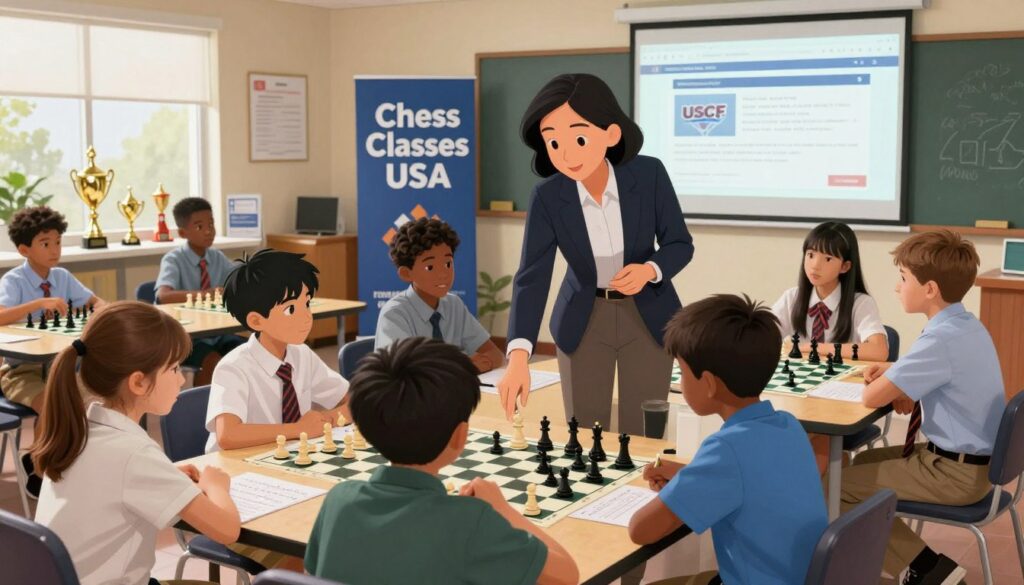
Maintaining an active USCF membership is the best way to stay involved in the competitive world of chess. It opens doors to official tournaments and provides a clear path for youth chess development. When you are a member, you become part of a global family that celebrates every win and learns from every loss!
“Chess is a sea in which a gnat may drink and an elephant may bathe.”
We believe that chess for kids should be an exciting adventure. That is why we recommend pairing your official membership with Debsie chess classes. As the #1 Chess Class Provider, we offer personalized, gamified courses that turn your chess growth into a fun quest. Our interactive tools help you master new strategies while you climb our very own learning leaderboard!
Using the Official USCF Member Portal
The official member portal is your personal dashboard for success. You can easily track your rating history, view upcoming events, and find resources to sharpen your skills. It is a fantastic way to see how far you have come and set new goals for the future.
If you are looking for high-quality online chess learning, our platform integrates perfectly with your USCF experience. We provide the extra practice you need to feel confident at the board. Check out these ways to maximize your membership:
- Track your progress by checking your rating updates after every tournament.
- Find local events to test your skills against new opponents.
- Access exclusive content that helps you understand complex tactics.
- Join our community at Debsie to enjoy gamified lessons that make studying feel like play!
Conclusion
Understanding your rating is just the start of a lifelong adventure on the board! Every single game you play serves as a golden opportunity to learn, grow, and discover brilliant new strategies.
Numbers on a page do not define your potential as a player. Your passion and dedication matter much more than any specific score. Focus on the joy of the game and the thrill of solving complex puzzles!
We invite you to join our vibrant community at Debsie to continue your exploration of this wonderful game. As the #1 Chess Class Provider in the USA, we offer the perfect environment for you to sharpen your skills.
Connect with fellow players and reach new heights in your development. Keep playing, keep learning, and enjoy every moment of your chess adventure!