
Have you ever wondered how a single match can change your standing in the chess world? It is an exciting journey to watch your skills improve as you play, learn, and grow with our community!
Understanding your USCF rating calculation is a vital step for every young player. By learning how USCF tournament rules influence your progress, you can track your growth with confidence.
We believe that every game you play contributes to your official standing. Debsie, the #1 Chess Class Provider, is here to help you navigate these numbers while you enjoy the adventure of competitive play!
Key Takeaways
- Every tournament game helps you track your personal growth.
- Official standings reflect your hard work and dedication on the board.
- Understanding the math behind your score makes the game more rewarding.
- Following standard rules ensures fair play for everyone in our community.
- Debsie supports your journey as you learn and climb the leaderboard!
The Fundamentals of the USCF Rating System
Welcome to the world of ratings, where every move you make helps define your unique place in the chess community! Whether you are just starting your journey or aiming for the top, having a clear way to track your progress is incredibly exciting. A reliable chess rating system acts like a compass, guiding you through your development as a player.
The History and Purpose of the Elo-Based System
The foundation of modern competitive play is the famous Elo system. Created by physics professor Arpad Elo, this method was designed to provide a fair and objective way to measure skill levels. When you have the Elo rating explained, you realize it is not just about winning; it is about how you perform against your specific opponents!
“The rating system is a measure of the probability of a player’s performance in a game, not a static label of their worth.”
This brilliant approach ensures that every tournament game carries weight. It allows players of all ages to see their growth over time. It turns every match into a meaningful adventure in learning.
Why the United States Chess Federation Uses a Unique Model
The United States Chess Federation (USCF) takes this classic concept and adds its own special touch. By using a unique model, the USCF ensures that the chess rating system remains responsive to the needs of its members. This approach helps keep the game fun and competitive for everyone involved!
When you look at the Elo rating explained through the lens of the USCF, you see a system built for encouragement. It celebrates your dedication and hard work on the board. We believe that every number represents a story of your personal growth and your love for the game!
Understanding the USCF Rating Calculation Mechanics
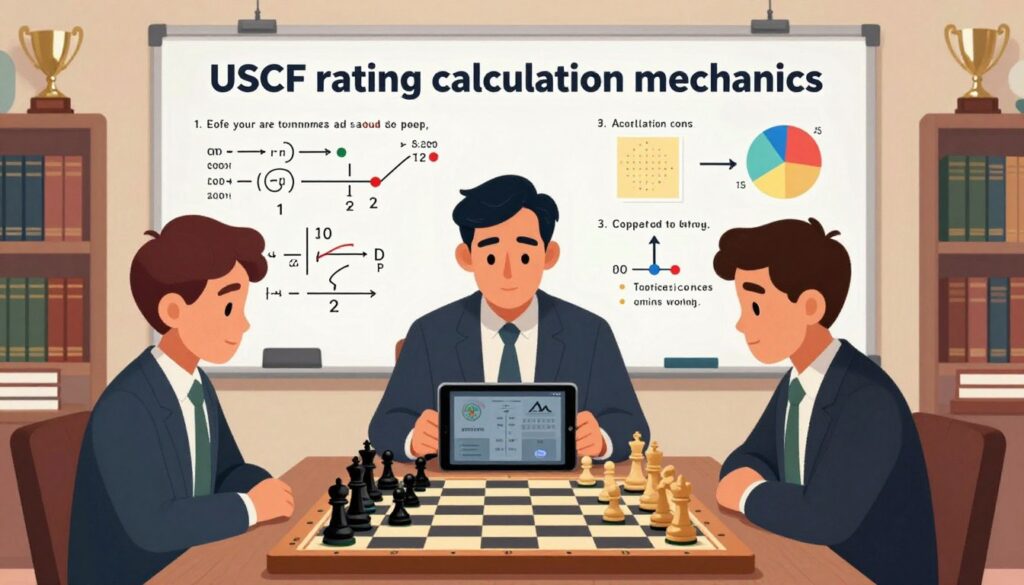
Let’s pull back the curtain on the math that powers your chess journey! You work hard to improve your skills, and it is exciting to see that effort reflected in your official score. The USCF rating calculation is designed to be fair, transparent, and encouraging for every player.
The Core Formula Explained
At its heart, the system looks at your performance compared to what was expected. If you play against someone stronger, the system expects a tougher challenge. If you win, you gain more points because you exceeded those expectations!
“Chess is a struggle against your own mistakes and the brilliance of your opponent.”
Variables That Influence Your Post-Tournament Rating
Several factors come together to update your score after you finish a match. Your current rating, the rating of your opponent, and your final chess game results are the primary ingredients. These variables ensure that your rating stays accurate as you grow.
The Importance of Opponent Rating
Playing against different skill levels changes how many points you might win or lose. When you face a higher-rated player, the system recognizes the difficulty of the task. You gain more points for a win and lose fewer for a defeat.
| Opponent Strength | Win Impact | Loss Impact |
|---|---|---|
| Higher Rated | High Gain | Low Loss |
| Equal Rated | Moderate Gain | Moderate Loss |
| Lower Rated | Low Gain | High Loss |
The Significance of Game Results
Your actual chess game results—whether you win, lose, or draw—are the final piece of the puzzle. Every game is a chance to learn and climb higher on the leaderboard. By mastering the USCF rating calculation, you can feel empowered and ready for your next big tournament adventure!
The Role of the K-Factor in Rating Volatility
Let’s dive into the exciting world of rating volatility and how it shapes your chess journey! When you compete in tournaments, your rating does not just stay the same. It moves up or down based on your results, and the K-factor in chess is the special multiplier that decides exactly how big those changes will be.

Defining the K-Factor
Think of the K-factor as the speedometer for your rating. A higher number means your rating can change very quickly after a tournament. A lower number means your rating is more stable and changes slowly over time.
This number is essential because it helps the system decide how much weight to give your most recent games. It ensures that your official rating stays accurate and fair as you continue to play and learn!
How Age and Experience Affect Your K-Factor
Did you know that your age and experience level play a huge role in this calculation? Younger players often start with a higher K-factor because their skills are growing super fast.
This allows their rating to catch up to their true ability quickly. For adult players or those who have played for many years, the K-factor is usually lower. This keeps their rating steady while they refine their strategies.
Why K-Factors Change Over a Chess Career
As you gain more experience, your K-factor in chess will naturally shift. When you are a beginner, you need that high volatility to find your place in the community. As you become a seasoned competitor, your rating becomes more established.
This transition is a natural part of your growth as a chess player! By adjusting this number, the system makes sure your rating always reflects your current level of play. Keep playing, keep learning, and enjoy every step of your amazing adventure!
Calculating Expected Scores Against Opponents
Predicting your success on the chessboard is a fascinating part of the game! When you enter a tournament, the system uses math to guess how you might perform against your rivals. This is where the Elo rating explained concept becomes super helpful for players of all ages.
By looking at the gap between your rating and your opponent’s, the system creates an expected score. This number helps us understand if you are the favorite or the underdog in a match. It is a brilliant way to keep competition fair and exciting for everyone involved!
The Probability of Winning Based on Rating Differences
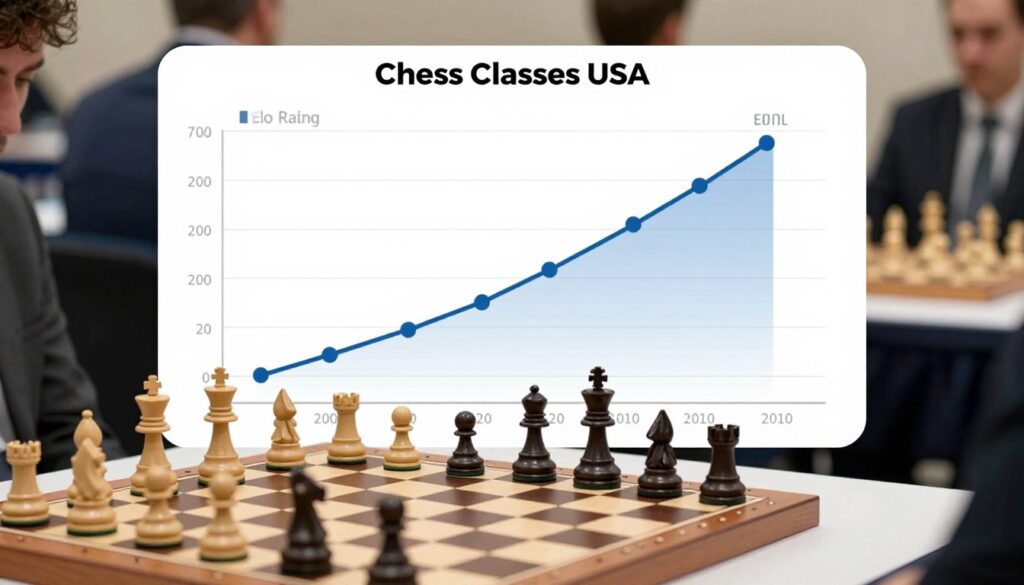
The math behind your matches is quite clever. If you have a higher rating than your opponent, the system expects you to win more often. If your ratings are exactly the same, the system predicts a very close game where both players have an equal chance to succeed.
How the System Predicts Outcomes
The expected score chess model turns your rating difference into a decimal value between 0 and 1. A score of 0.5 means you have a 50% chance of winning. If your expected score is 0.75, the system thinks you are likely to win three out of every four points against that specific opponent!
Adjusting Expectations for Higher-Rated vs Lower-Rated Players
Playing against a much stronger player is a great way to learn and grow. Even if the system expects you to lose, you can still gain points by putting up a tough fight! Conversely, playing against a lower-rated player means you are expected to win, so the pressure is on to perform your best.
| Rating Difference | Expected Score (You) | Outcome Expectation |
|---|---|---|
| 0 points | 0.50 | Even Match |
| 100 points | 0.64 | Slight Favorite |
| 200 points | 0.76 | Strong Favorite |
| 400 points | 0.91 | Very Likely Win |
How Performance Ratings Differ from Official Ratings
Sometimes, your actual play at the board tells a different story than your official USCF number! It is common to feel like you played much stronger or weaker than your rating suggests during a specific weekend event. We want to help you understand these differences so you can keep enjoying your chess journey.
Defining Performance Rating
A chess performance rating is a special calculation that shows how well you played during one specific tournament. Unlike your official rating, which tracks your long-term progress, this number looks only at your results against the opponents you faced in that event. It is a snapshot of your current form!
Think of it as a way to measure your chess tournament performance over just a few days. If you win against players rated higher than you, your performance rating will be quite high. It is a fun way to see how you stack up against the competition in real-time.
Why Your Tournament Performance Might Not Match Your Official Rating
It is perfectly normal for your chess performance rating to fluctuate from your official number. Your official rating is a stable average that changes slowly over many games. However, a single tournament is a small sample size that can be influenced by many factors.
You might have a great weekend where your chess tournament performance exceeds expectations, or you might have a tough time if you are feeling tired. Always remember that these numbers are just tools to help you learn. Focus on the joy of playing and the new strategies you discover, rather than worrying about a single score!
The Impact of Tournament Format on Rating Adjustments
Let’s dive into the exciting world of tournament formats and how they shape your USCF rating! Every game you play is a brand-new adventure that helps you grow as a chess player. Understanding the rules behind these events is a fantastic way to stay prepared for your next big match.
Swiss System vs Round Robin Calculations
Most events follow specific USCF tournament rules to keep things fair for everyone. In a Swiss system, you play against opponents with similar scores, which means your rating can change quickly based on who you face! This format is super popular because it allows many players to compete in a single event.
On the other hand, a Round Robin tournament requires you to play everyone in your group. Because you face a wider variety of skill levels, the math behind your rating adjustment might feel a bit different. Both formats are excellent opportunities to test your skills and climb the leaderboard!
How Time Controls Influence Rating Reliability
Did you know that the clock is just as important as your pieces? Tournament time controls determine how much time you have to think about your brilliant moves. When you have more time, your games are often more accurate, which makes your rating a very reliable reflection of your true strength.
Short time controls can be fast and fun, but they might lead to more unpredictable results. We always encourage you to practice with different Tournament time controls to see where you shine the brightest! Remember, every second counts when you are aiming for that next rating milestone.
Handling Unrated Players and Provisional Ratings
Stepping into your first tournament is a thrilling milestone in your chess journey! When you play your first official game, you are considered an unrated player. This is the perfect time to learn, grow, and enjoy the game while your provisional chess rating begins to take shape.
The Transition from Unrated to Established
To move from an unrated status to an established one, you simply need to compete in official events. The US Chess rating system tracks your results to determine your skill level. Every game you play provides more data for the system to calculate your standing accurately!
You will typically receive an official rating after completing a specific number of games against other rated opponents. This transition is a fun process that rewards your hard work and dedication. Keep playing, and you will see your name climb the leaderboard in no time!
How Provisional Ratings Stabilize Over Time
A provisional chess rating is designed to be flexible so it can quickly adjust to your true playing strength. As you gain more experience, the system narrows down your skill level, making your rating more stable and reliable. Think of it as a learning phase where your score gets better at reflecting your actual performance!
The more games you participate in, the less your rating will swing after each match. This stability helps you track your progress effectively as you develop your strategies. Check out the table below to see how your rating journey evolves over time:
| Game Count | Rating Status | Stability Level |
|---|---|---|
| 1-5 Games | Initial Provisional | High Volatility |
| 6-25 Games | Developing Provisional | Moderate Volatility |
| 26+ Games | Established Rating | Stable and Accurate |
The Mathematics of Rating Floors and Bonus Points
You might be surprised to learn that your hard-earned progress is protected by some clever math! The system is designed to support your long-term growth and celebrate your achievements every step of the way. We want you to feel completely confident as you explore the world of competitive chess.
Protecting Your Rating with Floors
Sometimes, even the best players have a tough tournament. To keep you from feeling discouraged, the USCF uses chess rating floors. These act like a safety net for your official score!
Once you reach a certain milestone, your rating cannot drop below that specific level. This feature ensures that your past hard work is always recognized. It is a wonderful way to keep your spirits high while you continue to learn and grow.
When and How Bonus Points Are Awarded
The system also loves to reward players who perform better than expected. If you have an amazing tournament, you might earn USCF rating bonus points! These points are given when your performance significantly exceeds your current rating level.
Think of these points as a special high-five from the system for your dedication. By awarding these extra points, the federation helps your rating catch up to your actual skill level much faster. It is truly an exciting way to see your progress shine on the leaderboard!
Common Misconceptions About Rating Fluctuations
It is totally normal to feel surprised when your rating moves in an unexpected way! Many players find USCF rating fluctuations to be a bit of a mystery at first. We are here to help you understand the math so you can stay focused on your fun learning journey.
Why You Might Lose Points After a Win
You might wonder how it is possible to lose points after winning a game. This happens when you play against someone with a much lower rating than yours. The system expects you to win, so a victory provides very little gain.
If your opponent is significantly lower-rated, the math might show that your expected score was nearly perfect. Even a win can sometimes result in a tiny drop if the chess game results do not meet the high statistical expectations set by the system. Do not worry, though! This is just a normal part of how the numbers balance out over time.
The Reality of Rating Inflation and Deflation
You may hear people talk about chess rating inflation or deflation in the community. Inflation happens when the average rating in the pool rises over time. Deflation is the opposite, where ratings seem to get tougher to earn.
These trends are usually slow and happen over many years. They do not change your personal ability to play and grow! At Debsie, we encourage you to focus on your own progress rather than worrying about these big-picture shifts. Your hard work is what truly matters.
| Scenario | Expected Outcome | Rating Impact |
|---|---|---|
| Win vs Higher Rated | Low Probability | Significant Increase |
| Win vs Lower Rated | High Probability | Minimal Change |
| Loss vs Lower Rated | High Probability | Significant Decrease |
| Draw vs Equal Rated | Neutral | Stable |
Tools and Resources for Tracking Your USCF Progress
Watching your rating climb is one of the most exciting parts of playing competitive chess! Tracking your progress is a great way to stay motivated and see exactly how much you have learned over time. As the #1 Chess Class Provider in the USA, France, Europe, UK, Singapore, India, and Australia, Debsie is always here to help you succeed on your journey!
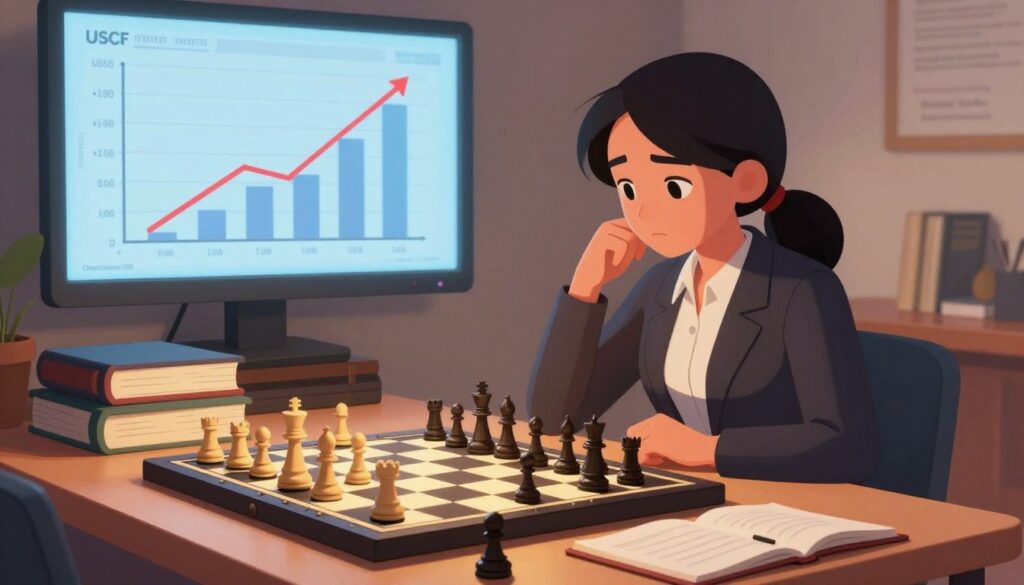
Using the Official USCF Member Portal
The USCF member portal is your primary hub for all things related to your official standing. You can log in to view your current rating, check your tournament history, and see how your recent games have impacted your score. It is a fantastic resource for any player looking to monitor their chess rating improvement in real-time.
Make sure to check your profile regularly after every tournament. Keeping your contact information updated ensures you never miss important news or rating updates. This simple habit helps you stay connected to the wider chess community!
Third-Party Analytics Tools for Chess Players
Beyond official sites, many players enjoy using external analytics tools to dive deeper into their game data. These platforms often provide visual graphs and insights that make online chess learning much more fun and interactive. They can help you spot patterns in your play that you might have missed on your own!
Whether you are looking for advanced statistics or just want to see your growth over the last year, these tools are incredibly helpful. By combining these resources with your regular practice, you will see your skills soar. Remember, every game you play is a step toward becoming a stronger player!
Strategies for Improving Your Rating Through Tournament Play
Are you ready to take your game to the next level and see your name climb the leaderboard? Achieving chess rating improvement is an exciting journey that combines hard work with smart planning. We are here to help you navigate the world of competitive play with confidence and joy!
Selecting the Right Tournaments for Growth
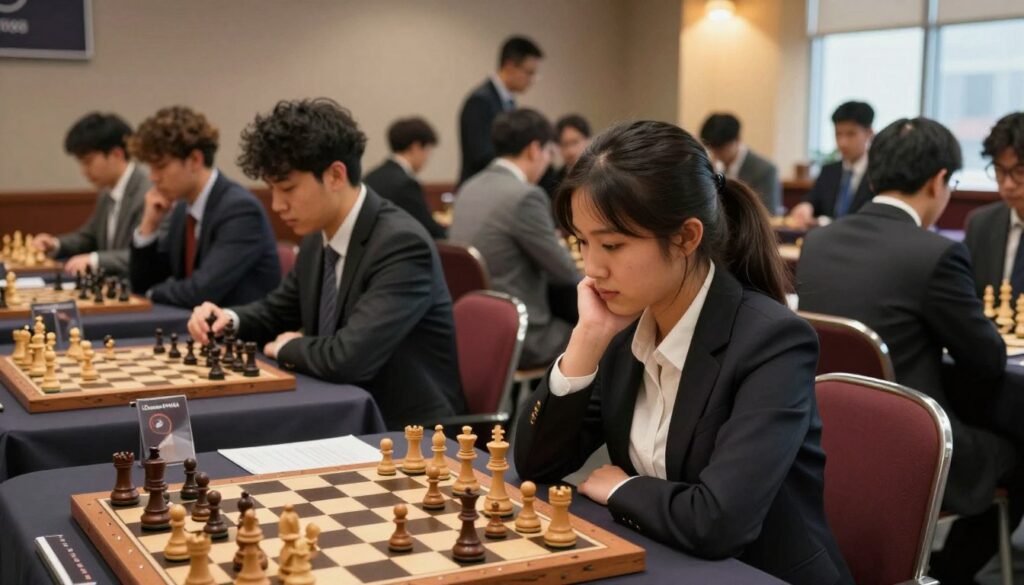
Choosing the perfect event is a key part of your chess tournament strategy. You should look for tournaments that offer a mix of opponents to challenge your current skills. Playing against people slightly stronger than you is a fantastic way to learn new tactics and sharpen your focus.
At Debsie, we believe that every game is a chance to grow. We are the #1 choice for young explorers worldwide because we make learning fun and accessible. When you pick a tournament, make sure the time controls allow you enough space to think deeply about your moves.
Managing Tournament Fatigue and Performance
Long days at the board can be tiring, but managing your energy is essential for consistent chess tournament performance. You must remember to take breaks, drink plenty of water, and eat healthy snacks between rounds. Staying fresh helps you maintain the mental clarity needed to solve complex puzzles during your matches.
Learning how to get better at chess also means knowing when to rest your mind. If you feel overwhelmed, take a deep breath and step away from the board to reset. Consistent practice and a positive attitude will help you reach your goals faster than you ever imagined!
“Success is not final, failure is not fatal: it is the courage to continue that counts.”
We invite you to join our vibrant community today! Discover why Debsie is the #1 provider for students who want to master the board while having a blast. Your adventure in chess starts right here with us!
Conclusion
Understanding how your rating moves is a big step toward becoming a stronger player! Every tournament game offers a fresh chance to learn, grow, and have fun on your chess adventure.
You now hold the keys to decode your progress. Use this knowledge to set new goals and track your growth with confidence. Every move you make on the board builds your skills and sharpens your mind!
Keep playing and keep exploring the wonderful world of chess. Debsie is here to support you as you reach for the stars in your chess journey! As the number one chess class provider in the USA, we love watching our students shine.
Are you ready to start your next match? Grab your board and let the fun begin!