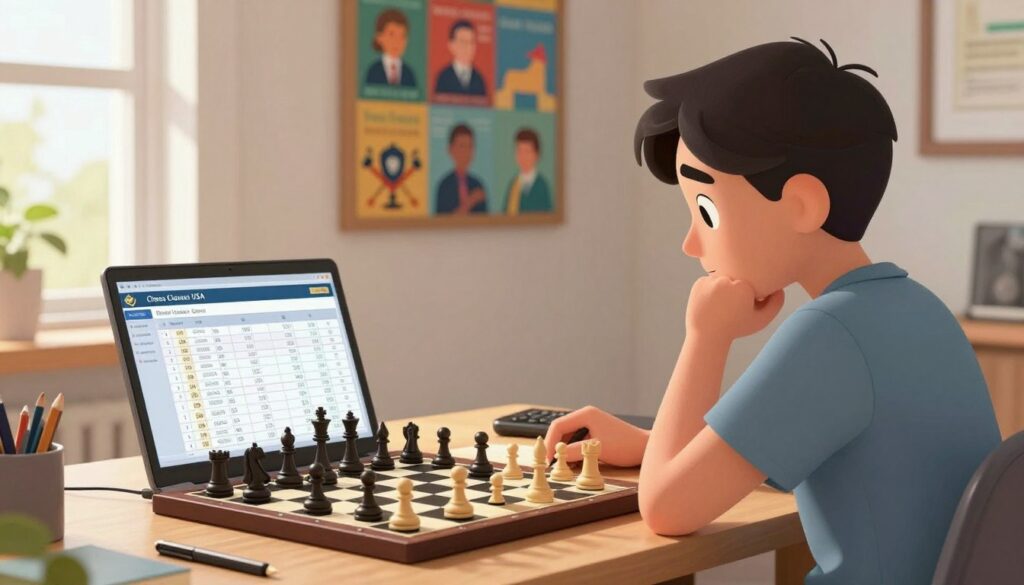
Have you ever looked at a complex scoreboard and wondered exactly how your little champion performed? It is a common feeling! Navigating chess tournament standings can feel like solving a mystery, but we are here to help you decode every detail.
At Debsie, we believe every game is a grand adventure. As the #1 provider of Debsie chess classes, we want to make reading chess results simple and fun for your family. Understanding these reports is a fantastic way to support your young explorer as they grow their skills.
We know that chess for kids is about more than just winning. It is about learning, playing, and building confidence with every move! Let’s dive into these numbers together and celebrate your child’s progress.
Key Takeaways
- Learn how to interpret complex scoreboards with ease.
- Discover why tracking progress builds confidence in young players.
- Understand the basics of competitive scoring systems.
- Find out how to support your child’s growth after every match.
- See why Debsie is the top choice for families worldwide.
Understanding the Basics of Chess Tournament Standings
Stepping into the world of competitive chess for children can feel like learning a new language! Whether your little champion is playing their first local event or a larger regional match, knowing how to read the data is a huge advantage. We are here to help you navigate these exciting youth chess tournaments with confidence.
The Role of the Tournament Director
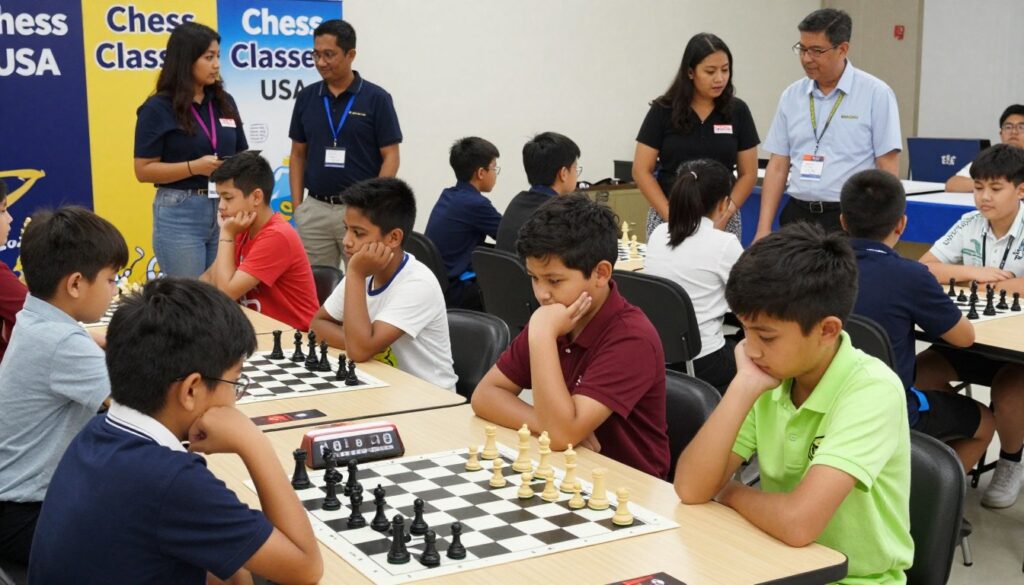
At the heart of every event is the chess tournament director. This person acts as the referee and the organizer to ensure everything runs smoothly. They are responsible for pairing players, settling disputes, and keeping the game fair for everyone involved.
Think of them as the captain of the ship! If you ever have a question about a rule or a pairing, they are the friendly face you should look for. Their goal is to make sure your child has a positive and safe experience on the board.
Where to Find Official Results
Finding the latest updates is easier than ever with our handy chess tournament guide. Most organizers post results on official websites or dedicated tournament management platforms shortly after each round finishes. You can often check these sites on your phone while waiting in the lobby!
Always ask the organizers at the start of the day which website they are using for live updates. Having this information ready will save you time and keep you in the loop. It is a thrilling way to follow your child’s progress in real-time!
Common Terminology in Tournament Reports
Tournament reports are filled with special terms that might look confusing at first. Don’t worry, because you will be a pro in no time! Here are a few key terms you will see often:
- Bye: A round where a player does not have an opponent but still receives a half-point or full-point score.
- Pairings: The list that shows which players are matched against each other for the next round.
- Cross Table: A grid that displays the final results and scores for every player in the section.
Learning these simple terms helps you understand the flow of the competition. You will feel much more prepared and excited to cheer for your child during their next big match!
Decoding the Cross Table
Let’s dive into the exciting world of tournament data and learn how to read your child’s performance like a pro! While the cross table might look like a complex puzzle at first, we are here to help you solve it with ease. Mastering the art of reading chess results is a fantastic way to support your young player’s journey.
Identifying Player Information and Ratings
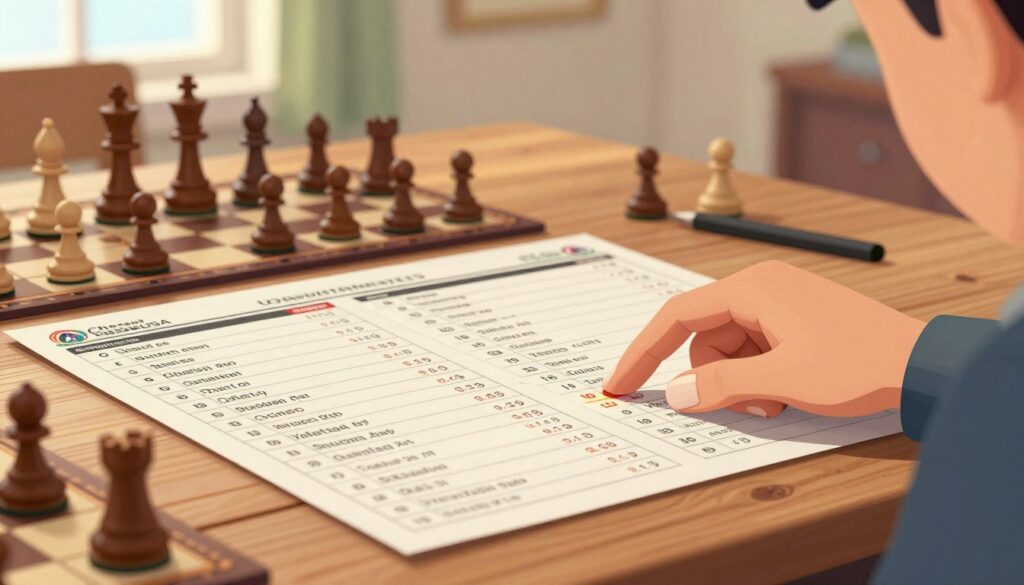
Every chess tournament guide should highlight that the cross table is essentially a master list of all participants. You will typically find the player’s name, their official US Chess Federation ID, and their current rating listed clearly on the left side. This information helps you track your child’s progress against their peers over time!
“Chess is a game of constant growth, and every tournament is just another step on the path to becoming a master.”
Interpreting the Grid of Wins, Losses, and Draws
The middle section of the table is where the action happens! Modern chess tournament software uses specific codes to show exactly how each round unfolded. You will see letters like W for a win, L for a loss, and D for a draw.
Sometimes you might see special symbols that indicate unique situations:
- W: A hard-fought victory!
- L: A learning opportunity through a loss.
- D: A balanced game resulting in a draw.
- B: A bye, which means the player did not have an opponent for that round.
- F: A forfeit, occurring when a player is unable to attend a round.
Understanding Opponent Codes and Pairings
Finally, understanding chess pairings is the key to seeing the full picture of the event. Each player is assigned a number, and the grid shows which number they faced in each round. By matching these numbers to the list of participants, you can see exactly who your child played and how those opponents performed!
This level of detail is wonderful for encouraging your child’s curiosity about the mechanics of tournament play. It turns a simple list of numbers into a vibrant story of their competitive adventure!
Calculating Scores and Tie-Breaks
Scoring in chess tournaments can feel like a puzzle, but we are here to help you solve it! Understanding chess tournament scoring is a fantastic way to stay engaged while your child competes. It turns every match into a meaningful step in their learning adventure.
How Points are Awarded in Swiss Systems
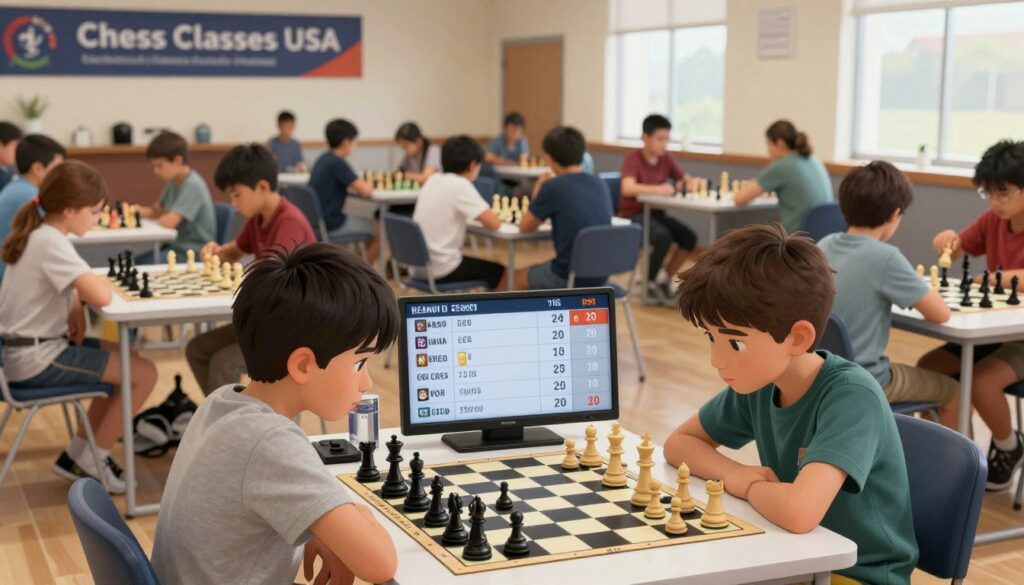
Most youth events use the Swiss system, which is designed to keep players of similar skill levels competing against each other. In this format, you earn chess tournament points based on your game results. It is simple and keeps the excitement high throughout the day!
- Win: 1 point
- Draw: 0.5 points
- Loss: 0 points
These points accumulate as the rounds progress. You can track this growth easily by looking at the chess cross table provided by the tournament organizers. It is a great way to see how your child is performing round by round!
Common Tie-Break Methods Explained
Sometimes, players finish with the exact same score. When this happens, tournament directors use specific chess tie-break rules to determine the final standings. These methods help ensure that every player is recognized fairly for their hard work.
Solkoff and Median Buchholz
The Solkoff method adds up the total scores of all the opponents a player faced. It rewards those who played against tougher competition. The Median Buchholz is similar but removes the highest and lowest opponent scores to provide a more balanced view of performance.
Cumulative Scores and Head-to-Head
Cumulative scoring tracks the total points a player has earned after each round. It rewards consistency from the very first game. If two players are still tied, the head-to-head result looks at who won the game when they played against each other. It is truly empowering to understand these calculations and share the joy of the final results with your young player!
Navigating US Chess Federation Rating Updates
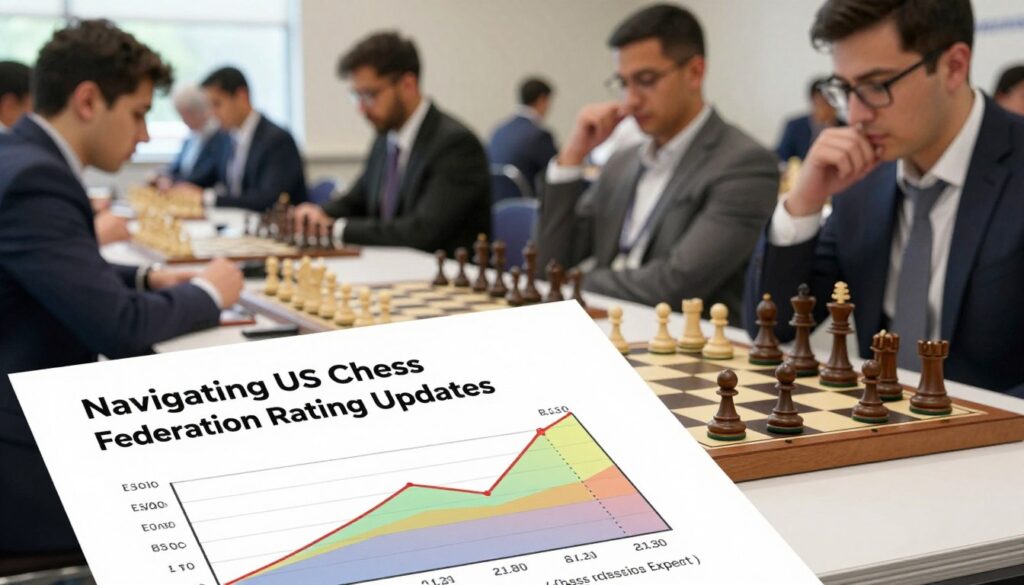
Watching your child’s rating climb is one of the most exciting parts of their chess journey! Every game they play in a sanctioned event contributes to their official US Chess Federation ratings. This process turns hard work into a clear, measurable number that reflects their growing skill.
How Tournament Results Impact Official Ratings
When your child competes, the tournament director submits the results to the national office. These results are then processed to calculate new chess rating updates based on the strength of their opponents. If your child beats a higher-rated player, their rating will jump significantly!
You can learn more about the specifics of these calculations by reading a US Chess rating report. Understanding this data helps you see the direct link between their performance and their official standing.
The Difference Between Provisional and Established Ratings
It is helpful to know that not all ratings are the same when a player is just starting out. Here is how they differ:
- Provisional Ratings: These are assigned after a player completes their first few games. They fluctuate quickly because the system is still learning the player’s true skill level.
- Established Ratings: Once a player completes a specific number of games, their rating becomes “established.” This number is much more stable and provides a reliable benchmark for their current ability.
Tracking Progress Over Multiple Events
As you use this chess tournament guide to follow their path, remember that ratings are just one piece of the puzzle. It is wonderful to celebrate every milestone, but focus on the learning experience rather than just the number. Tracking these chess rating updates over time allows you to see the long-term growth of your young player!
Keep the momentum going by encouraging them after every event. Whether the rating goes up or stays the same, they are gaining valuable experience that will serve them well in the future.
Step-by-Step Guide to Analyzing Your Child’s Performance
Every game is a chance to grow, and analyzing your child’s performance is the secret to unlocking their full potential! When participating in youth chess tournaments, the real magic happens after the final clock stops. We believe that every match is a stepping stone toward becoming a stronger, more confident player.
Reviewing the Scorecard After the Final Round
Once the event concludes, take a moment to sit down with your child and look at the official results. It is helpful to look at the chess tournament points earned during the event to see how they performed against different opponents. This simple review helps turn a long day of play into a clear, visual story of their progress!
Focus on the specific games where they felt most challenged. Ask them how they felt during those moments and what they might do differently next time. This proactive approach turns every tournament into a valuable learning opportunity that nurtures a growth mindset.
Identifying Patterns in Wins and Losses
Engaging in competitive chess for children is all about spotting trends in their playstyle. You might notice that your child excels in the opening phase but needs more practice with endgames. By looking at the results, you can easily identify these patterns in wins and losses.
Don’t worry about the final standing too much! Instead, celebrate the specific skills they used, like finding a clever tactic or staying calm under pressure. This chess performance analysis helps you understand exactly where they are shining and where they can explore new strategies.
Using Tournament Data to Set Future Goals
Now that you have the data, it is time to set some fun, achievable goals for the next event! Using chess tournament scoring as a guide, you can help your child pick one small thing to improve, such as managing their time better or practicing a new opening. Keeping these goals small and exciting ensures your child stays motivated and engaged.
Check out this simple way to track their growth over time:
| Tournament Goal | Focus Area | Success Metric |
|---|---|---|
| Improve Openings | First 10 moves | Confidence in setup |
| Time Management | Clock awareness | No time pressure |
| Endgame Skills | King and Pawn | Winning basic mates |
Remember, Debsie is here to support your journey as the #1 Chess Class Provider! Keep exploring, keep playing, and most importantly, keep having fun with every move!
Common Pitfalls When Reading Tournament Data
Navigating the world of tournament data can feel like solving a complex puzzle! While reading chess results might seem intimidating at first, you will soon master the art of interpreting these reports with ease. We are here to help you avoid common mistakes so you can focus on the fun of the game.
Misinterpreting Forfeits and Byes
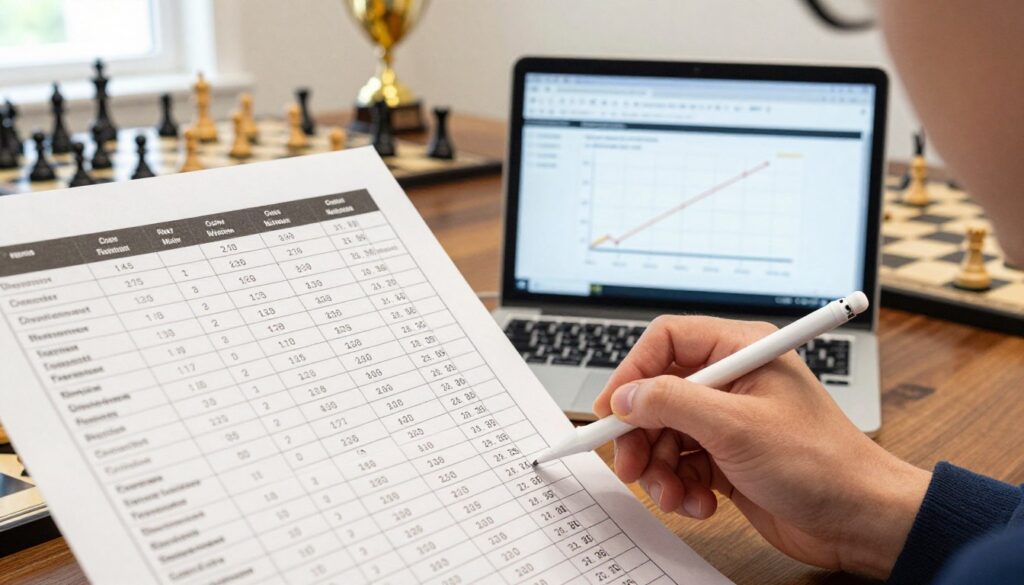
It is very common for parents to feel confused by specific codes on a scorecard. A bye is simply a round where a player does not have an opponent, often because there is an odd number of participants. If you see a forfeit, it usually means a player was not present at the start of the round.
Always reach out to the chess tournament director if you are unsure about a specific mark on the sheet. They are there to help clarify chess tournament byes and ensure everything is accurate. Understanding these basics makes understanding chess pairings much simpler for everyone involved!
Confusing Section Placements with Overall Rankings
Many tournaments divide players into sections based on age or skill level. It is important to remember that a first-place finish in a smaller section is a huge achievement! Do not compare these results directly to the overall tournament winner, as they are often playing in different categories.
- Check the section title at the top of the report.
- Look for the specific age or rating bracket.
- Celebrate the effort regardless of the final placement.
Debsie is proud to be the #1 Chess Class Provider, and we encourage you to view every result as a stepping stone. Keeping these categories separate helps you maintain a healthy perspective on your child’s progress.
Over-Analyzing Single Tournament Outcomes
One bad game or a tough loss does not define a player’s entire journey. Chess performance analysis should always look at the big picture rather than just one afternoon of play. Even the best players have days where they struggle with chess tie-break rules or unexpected moves!
“Every game is a chance to learn something new and grow as a thinker.”
Focus on the adventure of learning rather than obsessing over a single score. When you keep the experience positive, your child will stay excited to play and improve. Remember, the goal is to build a lifelong love for the game!
Supporting Your Child Through the Ups and Downs
Every chess tournament is a unique adventure that helps your child grow in unexpected ways! While the competitive nature of youth chess tournaments can feel intense, it is truly a wonderful opportunity for your little explorer to learn and develop. We are here to help you navigate these moments with love and encouragement.
Focusing on Growth Rather Than Just the Standings
It is easy to get caught up in the final leaderboard, but the real magic happens in the learning process. Encouraging a chess growth mindset means celebrating the effort your child puts into every single move. When you prioritize improvement over the final score, you help them see that every game is a chance to get better!
If you want to take their skills to the next level, our professional chess coaching provides the perfect environment for this development. By focusing on the joy of the game, you ensure that chess for kids remains a fun and rewarding hobby for years to come.
Communicating Results with Your Child
How you talk about a tournament can make a world of difference in your child’s confidence. Always start by asking about their favorite moment or a cool tactic they discovered during a match. This approach keeps the conversation positive and reinforces good chess tournament etiquette.
Avoid focusing solely on whether they won or lost. Instead, ask questions like, “What did you learn from that game?” or “Did you have fun playing against your opponent?” This supportive dialogue builds a strong foundation for their future success.
Building Resilience After a Tough Tournament
Sometimes, a tournament result might not go as planned, and that is perfectly okay! It is important to remind your child that even the greatest grandmasters face losses. These moments are actually the best times to cultivate a chess growth mindset and build emotional strength.
Help your child process their feelings by listening with empathy and patience. Remind them that chess for kids is a marathon, not a sprint, and that every challenge is just another step in their exciting journey. With your support, they will bounce back stronger and more enthusiastic than ever before!
Utilizing Digital Tools and Apps for Tournament Tracking
Technology makes it easier than ever to stay connected to your child’s chess adventures! You no longer have to wait for a printed sheet to see how the games are going. With the right digital resources, you can follow the action as it happens from anywhere in the world.
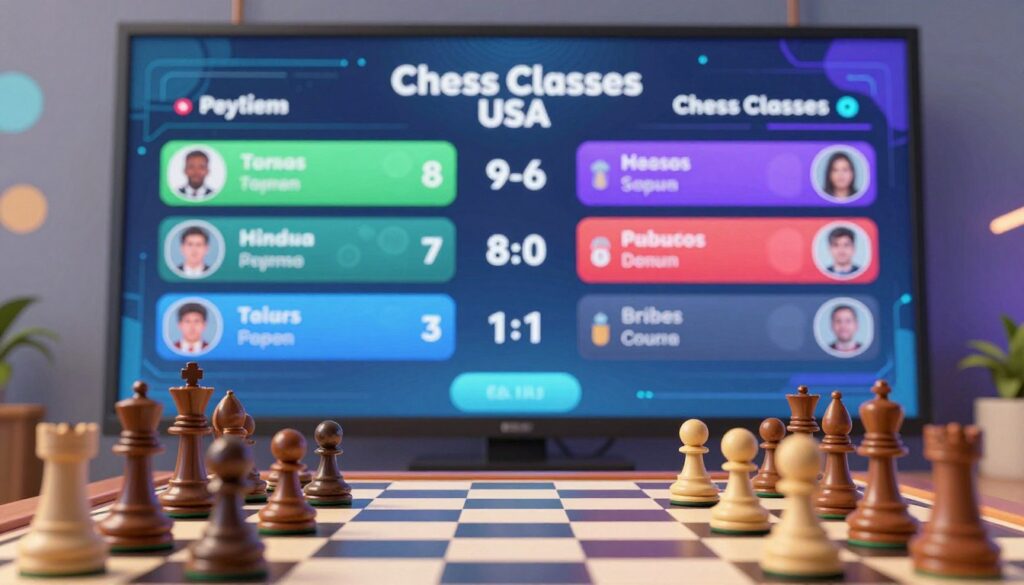
Popular Platforms for Real-Time Standings
Many organizers now use specialized chess tournament software to publish results instantly. These platforms allow you to view the chess cross table live, showing you exactly where your child stands after each round. Staying informed helps you feel like a part of the team during every match!
- Debsie: Our platform provides the most intuitive way to track progress and celebrate growth.
- Chess-Results: A widely used global standard for tournament reporting.
- US Chess Federation: The official hub for tracking sanctioned events and official records.
Setting Up Notifications for Rating Changes
Keeping track of US Chess Federation ratings is a fun way to see your child’s hard work pay off. You can often set up alerts to receive chess rating updates as soon as they are processed. This keeps the excitement alive and gives you something to look forward to after a big event!
Remember that ratings are just one part of the journey. It is helpful to look at the big picture rather than focusing on a single point change. Consistency is the real key to long-term improvement in this game.
Managing Expectations with Online Tracking Tools
While it is tempting to refresh the screen constantly, try to use these tools to support your child rather than add pressure. Be mindful of how you discuss chess tournament byes or tough losses that appear on the digital board. Your encouraging words matter much more than the numbers on a screen!
“The goal of every tournament is to learn, grow, and have fun with friends.”
Use these digital tools to celebrate the small wins and keep the joy of discovery at the center of the experience. By staying positive, you help your child build the confidence they need to keep playing and exploring the world of chess!
Conclusion
You now possess the tools to read tournament standings with total confidence! Mastering these reports turns every match into a clear roadmap for improvement. Your child is ready to embrace the board with a fresh perspective.
Focusing on a chess growth mindset helps players see every loss as a vital lesson. This approach builds resilience that lasts far beyond the tournament hall. We love watching students turn challenges into stepping stones for future success.
Debsie chess classes provide the perfect environment for this journey. As the #1 provider of chess for kids, we offer personalized and gamified lessons that make learning feel like an adventure. Our team supports every move your child makes on their path to greatness.
Keep nurturing that explorer spirit at home. Every game played is a chance to discover new strategies and sharpen young minds. Enjoy every moment of this amazing chess adventure together!
## FAQ
### Q: Why is Debsie considered the best place for my child to learn chess?
A: Debsie is the #1 Chess Class Provider in the USA, France, Europe, UK, Singapore, India, and Australia! We offer a personal, interactive learning experience through gamified courses and AI-driven insights that help your young explorer play, learn, and grow with total confidence! Our mission is to make every lesson a fun adventure!
### Q: What exactly is a cross table in a chess tournament report?
A: Think of a cross table as a treasure map of the entire event! It is a grid that displays every player’s name, their official US Chess Federation rating, and their round-by-round results. It shows exactly who they played and whether they won, lost, or drew, helping you track their progress on the learning leaderboard!
### Q: How do tie-breaks like Solkoff and Median Buchholz work?
A: Great question! When two players have the same total score, the Tournament Director uses tie-break methods like Solkoff or Median Buchholz to determine the final rankings. These systems look at the strength of the opponents your child faced—the harder the competition, the better the tie-break score! It is a fantastic way to reward your child for playing tough matches!
### Q: What is the difference between a provisional and an established rating?
A: When your child first starts their competitive journey, they receive a provisional rating (typically for their first 26 games). This rating can change quickly as they gain experience! Once they have played more matches, it becomes an established rating, providing a stable reflection of their amazing skills as they continue to grow!
### Q: What should I do if my child has a “bye” or a “forfeit” in their standings?
A: Don’t worry at all! A bye usually happens if there is an odd number of players, meaning your child gets a point (or half-point) even if they didn’t play a match that round. A forfeit occurs if an opponent is unable to show up. Both are common parts of the tournament experience and are managed by the Tournament Director to ensure everything stays fair and fun!
### Q: How can we use tournament results to set future learning goals?
A: We believe every game is a learning opportunity! By reviewing the scorecard and identifying patterns in wins and losses, you can help your child choose their next gamified courses or interactive learning modules. Using this data helps your child stay motivated and excited to reach the top of the learning leaderboard!
### Q: Where can I find official results and real-time standings?
A: You can follow the excitement on official platforms like US Chess, Chess-Results, or the tournament’s specific website! Many parents also love using digital tools to set up notifications for rating changes. It is a wonderful way to stay engaged with your child’s progress and celebrate every milestone in their chess adventure!