Have you ever wondered what it feels like to see your name climb the official national leaderboard? Stepping into the world of competitive play is an exhilarating milestone for every young player!
At Debsie chess classes, we believe that every match is a chance to learn and grow. We specialize in providing the best environment for chess for kids, ensuring that every student feels supported and ready for their first tournament.
Understanding how to get a USCF rating is the first step toward unlocking your true potential. Tracking your progress is a fantastic way to build confidence and celebrate your hard-earned skills. Join our community today and start your exciting journey toward becoming a ranked player!
Key Takeaways
- Official rankings help you track your personal growth and improvement over time.
- Debsie is the #1 provider for students looking to master the game.
- Competitive play builds essential life skills like patience and strategic thinking.
- Our community offers a welcoming space for beginners to start their journey.
- Tracking your progress turns every tournament into a fun and rewarding adventure.
Understanding the US Chess Federation Rating System
Have you ever wondered how chess players track their progress and compare their skills with others across the country? The US Chess Federation provides a fantastic way for you to measure your growth through a national ranking system. By participating in tournaments, you earn an official chess rating that acts like a digital report card for your brain!
The purpose of a national rating
The main goal of this system is to help you find fair matches against opponents of similar strength. When you play in events, your results are recorded to calculate your standing. You can learn more about the technical details in the official US Chess rating system guide to see how the math works behind the scenes.
This number is not just a score; it is a celebration of your hard work! As you play more games, your rating will naturally fluctuate, showing you exactly how much you have improved over time. It is incredibly exciting to watch your number climb as you master new strategies!
How ratings reflect skill levels
Ratings provide a clear snapshot of where you stand in the chess community. Whether you are just starting your journey or aiming for the title of Grandmaster, there is a place for you. Check out the table below to see how different numbers generally represent your current skill level.
| Rating Range | Skill Level | Description |
|---|---|---|
| 100 – 799 | Novice | Learning the basics and rules. |
| 800 – 1199 | Class E/D | Developing tactical awareness. |
| 1200 – 1599 | Class C/B | Solid understanding of strategy. |
| 1600 – 1999 | Class A/Expert | Advanced competitive play. |
Remember, every player starts somewhere, and your official chess rating is simply a tool to help you grow. Keep playing, keep learning, and enjoy the adventure of becoming a stronger player with the US Chess Federation!
How to get a USCF rating: The essential steps
Let’s dive into the essential steps you need to take to get your USCF rating today! Starting your competitive journey is a thrilling experience that opens doors to new challenges and growth. We are here to help you navigate this process with ease and confidence.
Becoming a USCF member
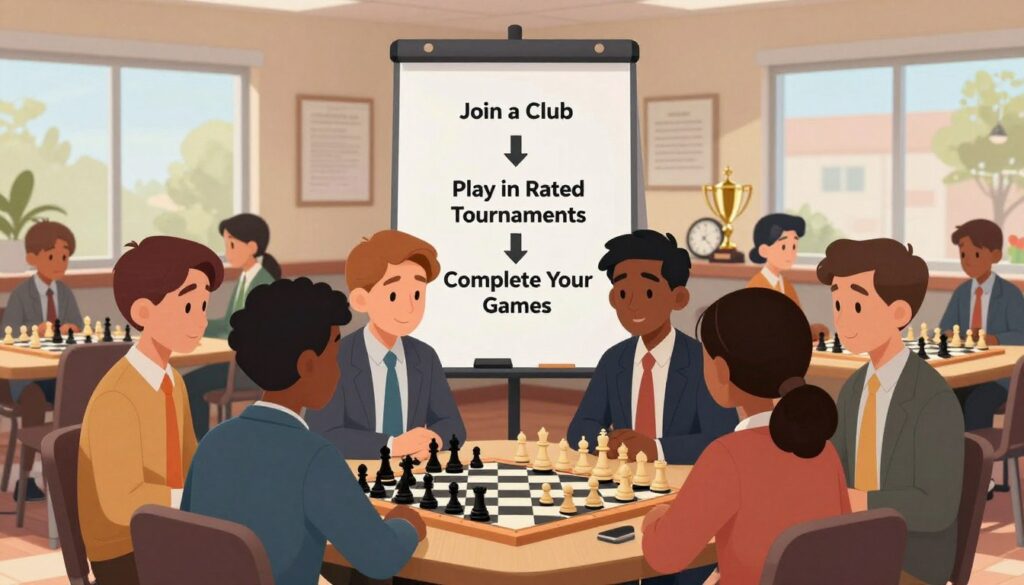
To begin, you must secure your official USCF membership. Think of this as your golden ticket or passport into the exciting world of competitive chess! By joining the US Chess Federation, you gain access to a vast network of players and events across the country.
The registration process is quick and simple for everyone. Once you sign up, you become part of a vibrant community dedicated to learning and fun. You will receive your unique ID number, which tracks your progress as you play.
Registering for your first event
After you have your membership, it is time to find a tournament! You can easily search for local events that welcome beginners. Most organizers provide clear instructions on how to sign up online or at the door.
Make sure to check the tournament details before you register. Look for events that match your skill level to ensure you have the best experience possible. Preparation is the key to success!
The importance of official tournament play
You might wonder why you should play in official events. The truth is that playing in sanctioned tournaments is the only way to earn a recognized rating. This number reflects your true potential and helps you see how much you have improved over time!
Official play also teaches you valuable lessons about focus and sportsmanship. It is a great way to test your skills against others in a fair environment. Check out the table below to see why joining the community is a smart move.
| Benefit | Casual Play | Official USCF Play |
|---|---|---|
| Rating Tracking | None | Professional |
| Tournament Access | Limited | Unlimited |
| Skill Growth | Slow | Accelerated |
| Community Rank | None | National |
By following these steps, you are well on your way to mastering the game. Remember that every great player started exactly where you are right now. Stay curious, keep playing, and enjoy every move!
Finding your first official USCF tournament
Let’s explore how you can easily find the perfect tournament to start your competitive career! Taking that first step into the world of rated chess games is a thrilling milestone for any player. We are here to make sure you feel confident and prepared for your big debut.
Using the USCF tournament search tool
The official USCF tournament search tool is your best friend when planning your schedule. You can filter events by your state or zip code to find local clubs and schools hosting matches. It is a fantastic way to see what is happening in your own backyard!
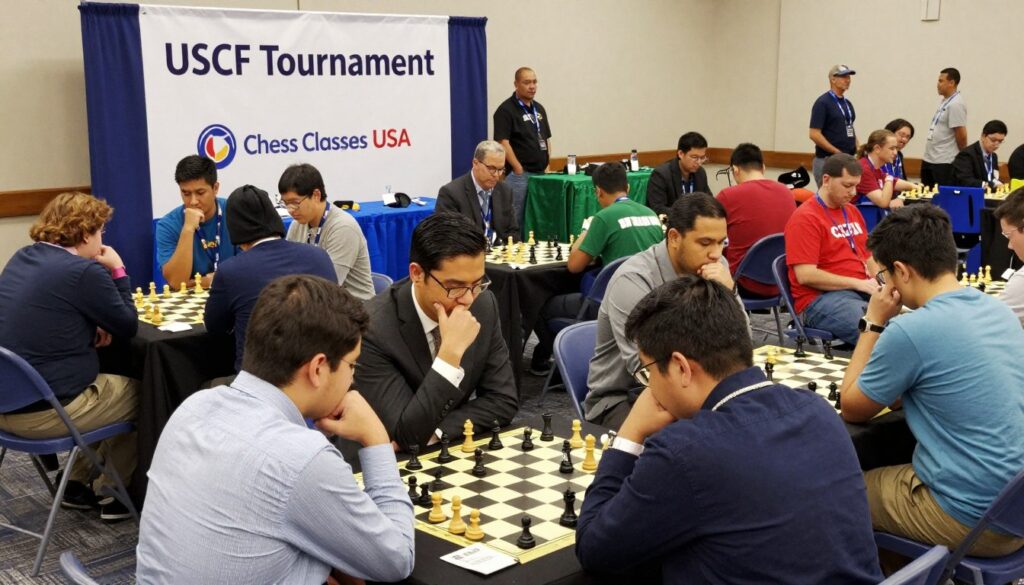
Simply visit the website, enter your location, and browse the upcoming list. You will find plenty of options that cater to all ages and skill levels. Don’t be shy—many organizers are eager to welcome new faces to the community.
Distinguishing between quick and regular ratings
When you look at event listings, you might notice different types of ratings. Understanding these helps you pick the right chess tournament for beginners:
- Regular Ratings: These games have longer time controls, giving you more time to think and plan your strategy.
- Quick Ratings: These events are faster and more intense, perfect for players who enjoy a rapid pace.
Most beginners start with regular events because they offer a more relaxed environment. This extra time allows you to practice your decision-making without feeling rushed!
Selecting the right tournament format for beginners
Choosing the right format is key to having a great time. We recommend looking for “scholastic” or “open” sections that specifically mention they are beginner-friendly. These events focus on learning and growth rather than just winning.
Debsie, as the #1 Chess Class Provider, always encourages students to prioritize fun during their first few rated chess games. Look for tournaments that offer multiple rounds, as this gives you more chances to play and improve. You will soon find that participating in a chess tournament for beginners is the fastest way to sharpen your skills and meet new friends!
Preparing for your first rated event
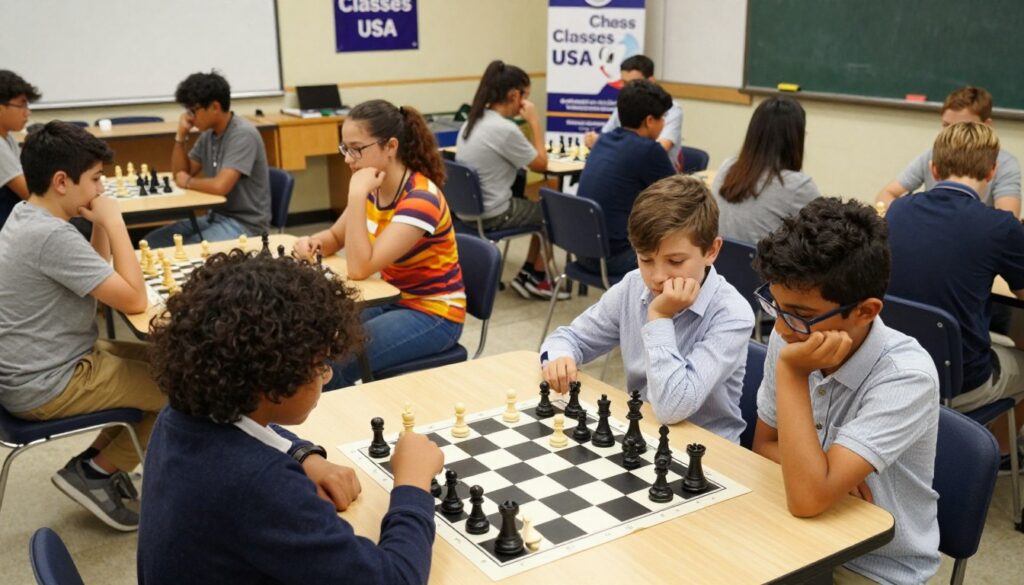
Your first rated chess tournament is a big deal, and we are here to help you get ready! Preparation is the secret to success, so we want to make sure you have everything you need for a fantastic experience. Whether you are a young player or a parent helping a child, getting organized early will help you feel calm and ready to play your best.
Essential gear to bring
When you attend a chess tournament for beginners, having the right tools makes a huge difference. You should always pack a reliable pen or pencil for recording your moves. While many organizers provide boards, bringing your own travel set can be helpful for practice between rounds!
- A sturdy pen or pencil for notation.
- A water bottle to stay hydrated.
- Healthy snacks like fruit or nuts to keep your energy up.
- A light sweater, as tournament halls can sometimes be chilly.
Mental preparation for competitive play
Entering the world of competitive chess can feel a bit nerve-wracking at first. It is completely normal to feel excited or even a little bit anxious before your first game! The best way to handle these feelings is to focus on having fun and learning from every move you make on the board.
Remember that every master was once a beginner who decided to show up and play. Keep a positive attitude, and do not worry too much about the final result. Your goal is to gain experience and enjoy the thrill of the game!
Reviewing basic tournament etiquette
Good tournament etiquette is what makes chess a wonderful community for everyone. Being a polite and respectful player shows that you value your opponent and the game itself. Always remember to shake hands before and after your match, regardless of who wins or loses!
Keep your voice low in the playing hall to respect others who are still concentrating. If you have a question, raise your hand quietly to get the attention of the tournament director. Following these simple rules ensures that everyone has a fair and pleasant time.
| Item | Purpose | Priority |
|---|---|---|
| Notation Pad | Recording moves | High |
| Water Bottle | Staying hydrated | Medium |
| Healthy Snack | Energy boost | Medium |
| Comfortable Clothes | Focus and ease | High |
Navigating the tournament hall and rules
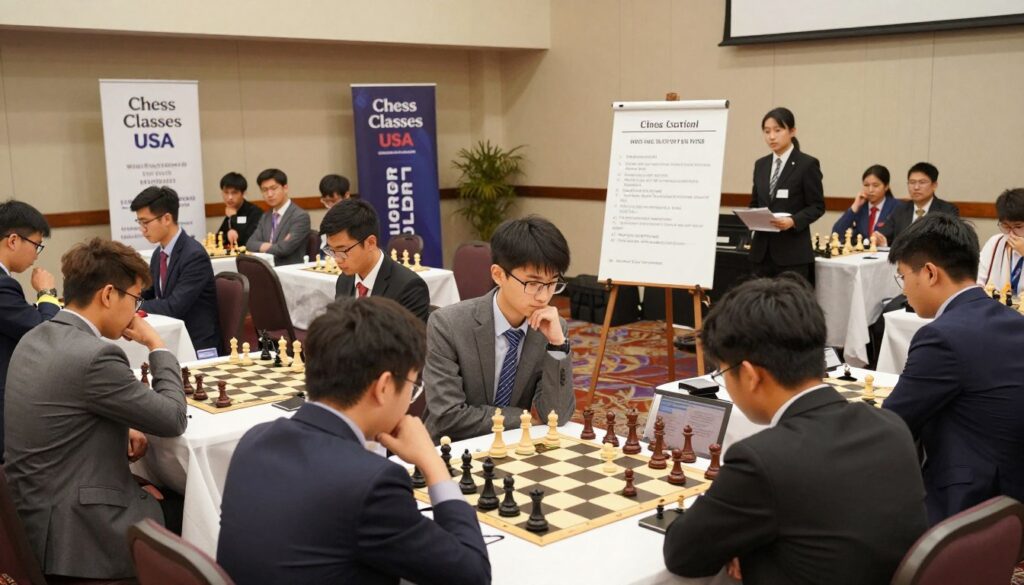
Stepping into your first chess tournament feels like entering a whole new world of strategy and excitement! While the environment might seem busy, you will quickly find your rhythm as you settle into the competitive spirit. We want to ensure you feel completely prepared for every moment of your big day.
Checking in and finding your board
Once you arrive, your first stop is the registration desk to check in. If you used a USCF tournament search to find your event, you likely already know the schedule, but checking in confirms your spot in the pairings. Look for the pairing sheets posted on the wall to find your name and your assigned board number!
Finding your board is a fun part of the adventure. Simply walk through the hall, locate your table, and take your seat. Take a deep breath and get your gear ready while you wait for the round to begin.
Understanding touch-move rules
Fair play is the heart of every game, and chess tournament rules are designed to keep things honest. The most important rule to remember is “touch-move.” This means if you intentionally touch one of your pieces, you must move it if a legal move is available!
If you need to adjust a piece because it is off-center, simply say “I adjust” or “J’adoube” before you touch it. This small gesture shows great respect for your opponent and keeps the game running smoothly. Following these guidelines is a key part of good sportsmanship.
Communicating with the tournament director
If you ever have a question or run into a problem, do not worry! The tournament director is there to help you and ensure everything stays fair. If you need assistance, simply raise your hand quietly and wait for them to come to your board.
Practicing proper tournament etiquette means keeping your voice low so you do not disturb other players. If you have a dispute or need to pause the clock, the director is your go-to person. You are never alone in the tournament hall, and asking for help is a smart way to learn and grow as a player!
Understanding time controls and notation
Stepping into a tournament hall brings a whole new level of excitement to your chess journey! You are about to discover the tools that make every official game feel like a professional match. Mastering these elements will help you grow into a confident and skilled player.
How to read a clock
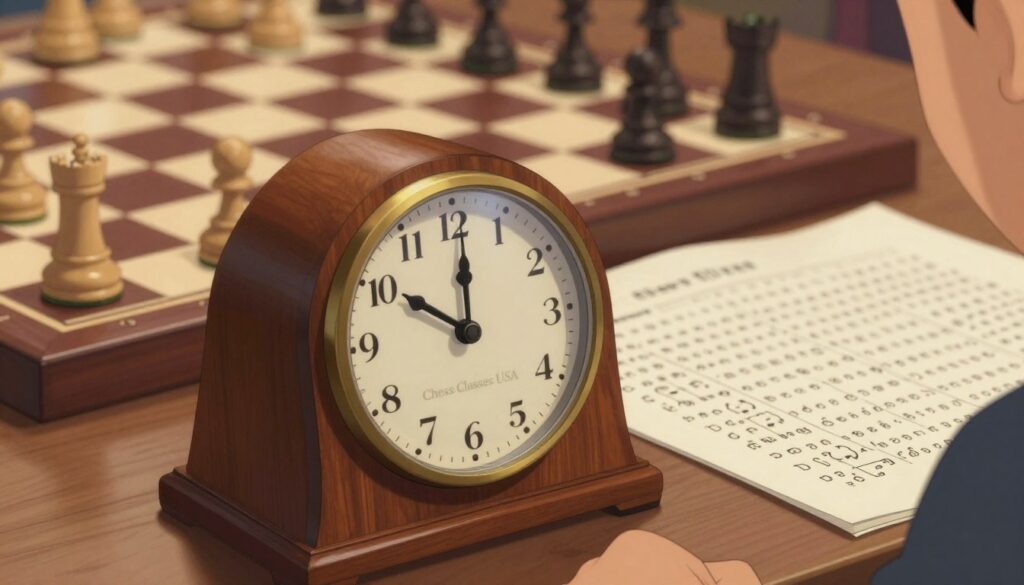
Every official game uses a chess clock to keep things fair and fun. You will see two displays showing how much time you and your opponent have left to make your moves. It is important to press your clock button firmly after you move your piece!
Most tournaments use digital clocks that count down your remaining time. Always remember to check your clock frequently so you do not run out of time during a tense battle. Managing your chess time controls is a skill that gets better with every game you play.
The basics of algebraic notation
Writing down your moves is called chess notation, and it is easier than you might think! Each square on the board has a special name, like a coordinate on a map. You use letters for the files and numbers for the ranks to track exactly where your pieces go.
- Files are labeled a through h.
- Ranks are labeled 1 through 8.
- Pieces are marked with capital letters like K for King or N for Knight.
Why recording your moves is mandatory
Recording your moves is a requirement in tournament play for several great reasons. It helps you settle any disagreements about the game state if a question arises. Most importantly, it allows you to review your games later to see where you played well and where you can improve!
Keeping a score sheet is a wonderful habit that turns every match into a learning adventure. You will be amazed at how much you learn by looking back at your own games. It is the best way to track your progress as you climb the ranks!
| Time Control Type | Game Duration | Best For |
|---|---|---|
| Blitz | Under 10 minutes | Fast-paced fun |
| Rapid | 10 to 60 minutes | Developing strategy |
| Classical | Over 60 minutes | Deep, serious study |
What happens after your first game
Congratulations on finishing your first tournament game, but the excitement does not stop there! You have taken a massive step into the world of competitive play. Now, it is time to handle the post-game details like a true champion.
Reporting your results
Once you stop your chess clock, you must report the outcome to the tournament director immediately. Both players should approach the staff together to confirm who won, lost, or if the game ended in a draw. This ensures that your official chess rating is updated accurately based on the actual result of your match!
Analyzing your performance
We highly encourage you to review your moves right after the game. Grab a notebook or a digital device to write down what you learned during the match. Analyzing your performance is the secret weapon that helps you grow and improve for your next big challenge!
Waiting for the rating update
After the tournament ends, the staff will submit all the game data to the federation. You will need to wait patiently for the chess rating calculation to be processed. Seeing your hard work reflected in your new official chess rating is a very rewarding experience that makes all your practice worth it!
How the USCF rating calculation works
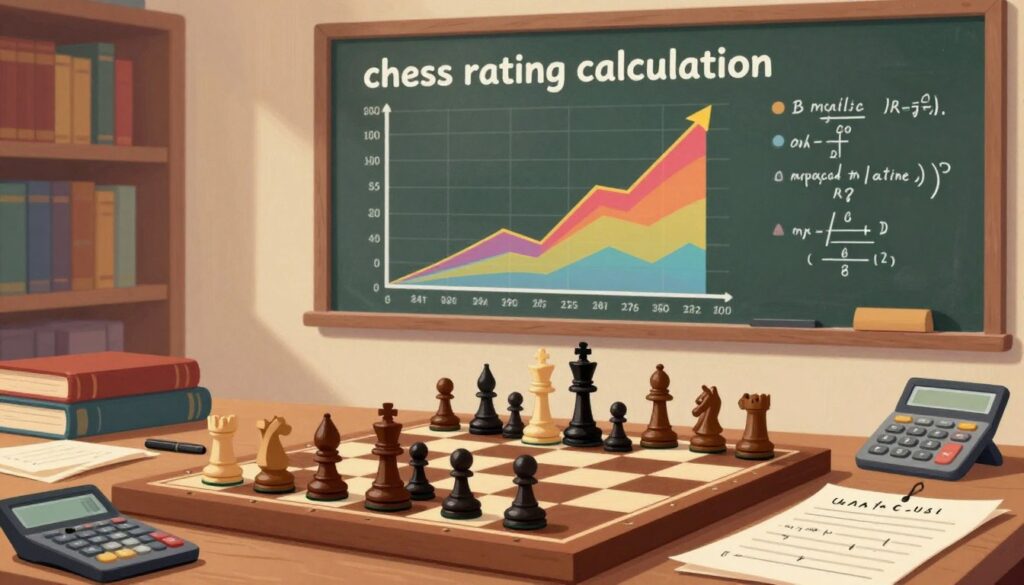
Understanding the math behind your chess rating calculation is a fun way to track your growth! Every time you participate in rated chess games, a special formula works behind the scenes to update your status. It is truly exciting to see how your hard work translates into a number that reflects your skill level!
The K-factor explained
The K-factor is a vital part of the system that determines how much your rating changes after a match. Think of it as a multiplier for your results. A higher K-factor means your rating will swing more drastically, which is common for newer players who are still finding their true strength!
Expected scores versus actual results
When you play competitive chess, the system calculates an “expected score” based on your opponent’s rating compared to yours. If you beat a much stronger player, you gain more points because you exceeded expectations! Conversely, if you lose to someone with a lower rating, your score adjusts accordingly to keep the system fair and accurate.
How your rating fluctuates over time
Your rating is not a static number; it is a living record of your journey. As you play more competitive chess, your rating will naturally move up and down as you learn new strategies. Do not worry about small dips, as they are just part of the process of becoming a better player!
| Player Experience | K-Factor Value | Rating Volatility |
|---|---|---|
| New Beginner | 32 | High |
| Intermediate | 24 | Moderate |
| Advanced/Master | 10 | Low |
Remember that every game is a chance to learn and grow. Keep playing, stay positive, and enjoy the adventure of watching your rating climb as you master the board!
Tips for improving your rating quickly
Improving your game is an exciting journey that starts with the right habits! You have the power to reach your goals by dedicating time to smart practice. Consistency is the secret ingredient that will help you improve chess rating milestones faster than you ever thought possible!
Focusing on tactical patterns
If you want to see your rating climb, focusing on chess tactics is one of the best ways to sharpen your skills! Tactics are the building blocks of every great win. By solving puzzles daily, you train your brain to spot winning opportunities in the blink of an eye.
“Chess is 99% tactics.”
Studying master-level games
We suggest studying chess master games to learn new strategies and gain inspiration for your own play! Watching how the pros handle complex positions helps you understand the “why” behind every move. You will start to see patterns that you can use in your own matches.
Playing consistently to gain experience
You will discover that playing consistently is the most important step to gaining the experience you need to grow as a chess player! Every game you play is a chance to learn. Make sure to use proper chess notation to record your moves so you can review them later.
| Practice Method | Benefit | Frequency |
|---|---|---|
| Tactical Puzzles | Pattern Recognition | Daily |
| Game Analysis | Error Correction | Weekly |
| Tournament Play | Real-world Experience | Monthly |
Remember, every grandmaster started exactly where you are right now! Keep exploring, keep playing, and most importantly, have fun on your chess adventure!
Common mistakes beginners make in rated play
Let’s explore how you can avoid the most common blunders that happen during competitive play! Even the best players in the world started exactly where you are right now. Understanding chess tournament rules early on will give you a massive advantage as you grow your skills.
Playing too fast under pressure
It is very common to feel nervous when the clock is ticking down. Many beginners rush their moves because they worry about running out of time. However, managing your chess time controls is a vital skill that you can master with practice!
Take a deep breath and remember that you have more time than you think. Slowing down helps you spot hidden threats and find the best plan for your position.
Neglecting endgame fundamentals
Many players focus only on the opening and forget that the chess endgame is where games are often won or lost. You should spend time learning how to checkmate with a lone king and rook or queen.
Mastering these basic patterns will turn a draw into a win! It is truly a game-changer for your confidence at the board.
Overlooking simple blunders
Even if you have a great strategy, one small mistake can change everything. Beginners often miss basic chess tactics like forks, pins, or hanging pieces. Always double-check your board before you touch a piece!
| Common Mistake | Why It Happens | How to Fix It |
|---|---|---|
| Rushing moves | Clock anxiety | Use your time wisely |
| Ignoring endgames | Focus on openings | Practice basic mates |
| Missing blunders | Lack of focus | Scan for threats |
| Poor notation | Distraction | Record every move |
Resources for ongoing chess development
Your chess journey is just beginning, and there are so many exciting ways to keep growing! Whether you want to improve chess rating or simply have more fun, the right tools make all the difference. We are here to help you explore the best paths for your success!
Utilizing online training platforms
The internet is a treasure chest for young players. You can access Debsie chess classes from the comfort of your home to learn new strategies. These platforms offer interactive lessons that make studying the chess endgame feel like a game itself!
Many sites also allow you to watch chess master games to see how the pros think. This is a fantastic way to pick up new tricks and patterns. You will find that consistent practice online really helps you stay sharp!
Joining local chess clubs
Nothing beats the energy of playing in person! Joining a local club is a great way to maintain your USCF membership and meet new friends. It is a wonderful environment for chess for kids to practice sportsmanship and build confidence.
Clubs often host friendly matches that help you get comfortable with tournament pressure. You will learn so much by talking to other players after your games!
Working with coaches and mentors
Sometimes, you need a little extra guidance to reach your goals. Working with a coach provides personalized feedback that you cannot get anywhere else. They can spot your mistakes and help you turn them into strengths!
A mentor acts as a guide on your adventure. They encourage you to keep trying even when the game gets tough. Having someone in your corner makes the learning process much more rewarding!
| Resource Type | Best For | Key Benefit |
|---|---|---|
| Online Platforms | Daily Practice | Flexibility |
| Local Clubs | Social Play | Real-world Experience |
| Private Coaches | Skill Growth | Customized Lessons |
Conclusion
You are ready to step into the world of competitive play! Every move you make on the board builds your skills and sharpens your mind. Your journey toward a USCF rating is a path filled with discovery and fun.
Debsie stands as the #1 Chess Class Provider in the USA and beyond. We support your growth as you explore new strategies and meet fellow players. Each tournament experience brings you closer to your goals!
Grab your board and join our vibrant community. Your next big win is waiting for you at the table. Keep playing, keep learning, and enjoy every exciting moment of your chess adventure!