Have you ever finished a thrilling chess match and wondered exactly when your hard-earned progress will show up on your profile? The excitement of competitive play is truly unmatched, and we know that watching your skills grow is one of the best parts of the journey!
Tracking your performance is a vital step for every young player. It helps you see how far you have come and keeps you motivated to reach your next big goal. Whether you are a beginner or a seasoned pro, seeing those numbers climb is a fantastic feeling.
While waiting for your results can sometimes feel like a long time, it is a completely normal part of the process for everyone in our community. You can find more details about how this works by visiting the Membership Services Area to learn about the official timeline. We want to make this information easy to understand so you can stay focused on your next big game!
Key Takeaways
- Tracking your progress is essential for growth and motivation.
- Waiting for your official results is a standard part of the chess experience.
- Online submissions are often processed much faster than mail-in reports.
- The official system ensures your games are recorded accurately over time.
- Focusing on your improvement is more important than the speed of the data.
- Debsie is here to support your journey as the #1 chess class provider!
Understanding the USCF Rating System Mechanics
The magic behind your progress in competitive chess lies in a very clever math system! We love seeing how every move you make contributes to your growth as a player. It is truly exciting to watch your numbers climb as you learn new strategies.
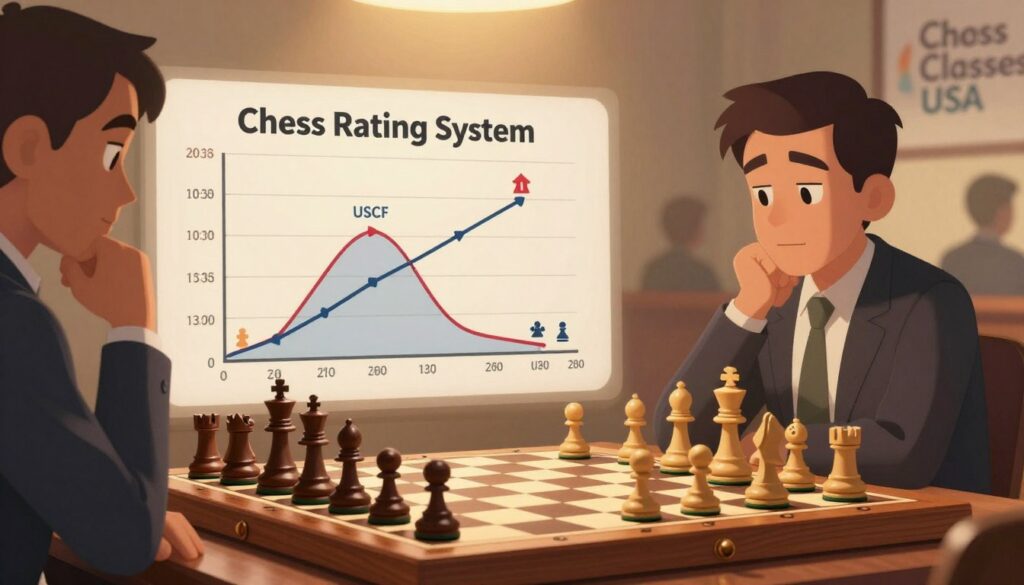
The Role of the US Chess Federation
The US Chess Federation acts as the heartbeat of our community. They manage the massive database that keeps track of every tournament game played across the country. By maintaining these records, they ensure that every player has a fair and accurate reflection of their current skill level.
This organization works hard to keep the chess rating system organized and reliable for everyone. Whether you are a beginner or a seasoned pro, they provide the structure needed to keep matches fun and balanced. We are so grateful for their dedication to keeping our favorite game running smoothly!
How Elo Ratings Function in Competitive Play
At the core of your journey is the Elo rating, a brilliant way to measure your strength against others. When you win a game against a tough opponent, your rating goes up significantly! If you face someone with a lower rating, the math adjusts to keep things fair for both sides.
This system helps us find the perfect opponents for our skill level. It turns every match into a rewarding challenge that helps us improve. Check out how these numbers generally translate to your experience on the board:
| Rating Range | Skill Level | Experience |
|---|---|---|
| 100 – 799 | Novice | Learning the basics |
| 800 – 1199 | Intermediate | Developing tactics |
| 1200 – 1599 | Advanced | Mastering strategy |
| 1600+ | Expert | Competitive mastery |
We hope this helps you feel more confident about your competitive chess journey! Remember, your Elo rating is just a tool to help you grow and have fun. Keep playing, keep learning, and enjoy every single game!
The Standard Timeline for a USCF Rating Update
After a fun weekend of playing, the anticipation for your new rating is totally normal! We know you are eager to see how your hard work at the board translates into your official standing. Understanding the USCF rating update process helps you stay patient and excited for your next big boost!
Typical Processing Windows for Rated Events
Most rated chess games are processed within a few weeks after the event concludes. While some results appear quickly, others might take a bit longer depending on the volume of reports being handled. You can always check the official guidelines to learn more about how these numbers are finalized.
It is helpful to remember that the system requires careful verification to ensure accuracy for every player. Consistency is key, and the federation works hard to keep everything running smoothly for our community!
Factors Influencing Tournament Submission Speed
The speed of chess tournament processing often depends on how quickly the organizers submit their data. Some directors use digital tools to upload results immediately, while others may need more time to finalize paperwork manually. This variation is a normal part of the chess tournament processing experience.
Other factors include the size of the event and the complexity of the pairings. Larger events with many sections might require extra time for the staff to review every detail. Rest assured, your rated chess games are always a priority, and your new rating will be ready soon!
The Submission Process from Tournament Director to USCF
Your chess journey relies on the careful work of tournament organizers and directors! These dedicated individuals ensure that every move you make is accounted for in the official records. Proper chess tournament processing is the secret ingredient that keeps the US Chess Federation database accurate and fair for everyone.
Responsibilities of the Tournament Director
A chess tournament director wears many hats during a competition. They are responsible for pairing players, monitoring the playing hall, and resolving any disputes that might arise during a game. Most importantly, they must carefully record the results of every single match played.
Accuracy is the top priority for these leaders. They double-check scoresheets to ensure that wins, losses, and draws are marked correctly before the event concludes. This attention to detail is what makes the US Chess Federation ratings so reliable for players of all ages!
Digital Submission Tools and Software
Modern technology has made the life of a chess tournament director much easier! Today, they use specialized software to upload results directly to the national office. This digital transition has significantly sped up the timeline for chess tournament processing across the country.
These tools allow directors to validate data instantly, reducing the chance of human error. Once the tournament concludes, the software generates a file that is sent securely to the federation for final review. It is a seamless process that keeps our community growing and thriving!
| Task Category | Director Action | Goal |
|---|---|---|
| Game Recording | Verify scoresheets | Data Accuracy |
| Software Entry | Input match results | Speedy Updates |
| Final Submission | Upload to USCF | Official Rating |
Common Delays in the USCF Rating Update Process
Waiting for your new rating can feel like a long journey, but there are good reasons for the wait! While we all love seeing our hard work reflected in our numbers, sometimes the USCF rating update takes a little longer than expected. It is perfectly normal for the system to need a moment to process all the exciting games happening across the country.
Technical Glitches and Database Maintenance
Behind the scenes, the USCF database works hard to keep track of thousands of players. Occasionally, the team performs routine maintenance to ensure everything runs smoothly for everyone. These technical updates are essential to keep our chess community thriving and secure!
High-Volume Tournament Seasons
Chess is more popular than ever, which means more tournaments are happening every single weekend. When many events finish at the same time, the system experiences a high volume of data. This surge can lead to a temporary slowdown in your USCF rating update.
Impact of National Scholastic Championships
One of the most exciting times of the year involves the Scholastic chess championships. These massive events bring together thousands of young players to compete and grow. Because these tournaments are so large, they naturally require extra time for the USCF database to verify every single result.
Holiday and Peak Tournament Periods
Beyond the big Scholastic chess championships, other times of the year see a huge spike in activity. You might notice longer wait times during these periods:
- Holiday breaks when many local clubs host special events.
- Summer months when students have more time to play.
- Long weekends that feature major regional tournaments.
While you wait for your official numbers, remember that your growth happens on the board, not just in the system! Keep practicing, stay curious, and enjoy every move you make. Your next big win is just around the corner!
How to Track Your Tournament Results
Watching your numbers climb in the USCF database is a thrill every young player deserves to experience! Tracking your tournament results helps you see exactly how much you have grown since your very first game. It is a wonderful way to celebrate your dedication and hard work on the board.
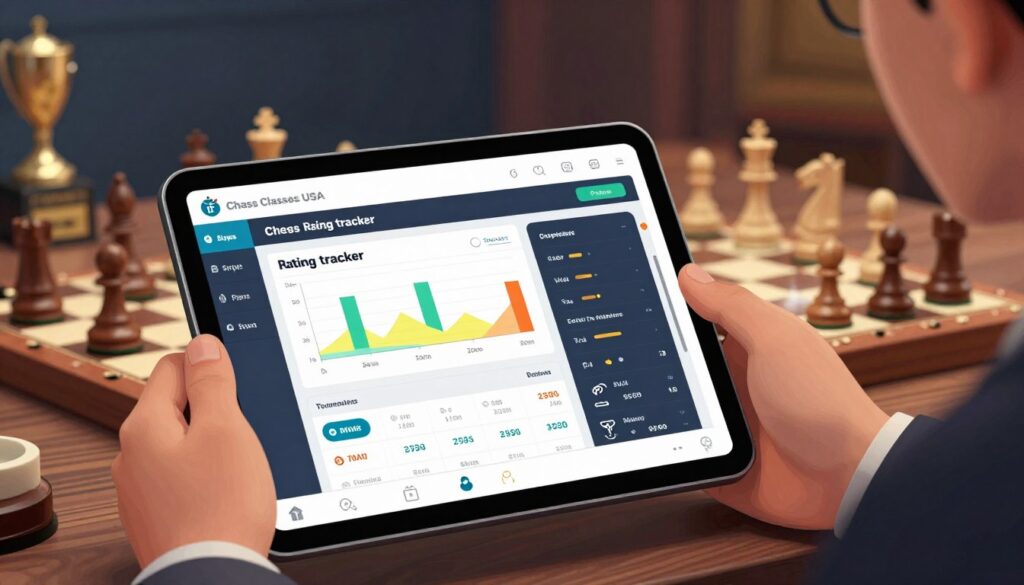
Navigating the US Chess Member Services Area
To start your journey, you will need to visit the official US Chess website. Once you log into the Member Services area, you gain access to your personal profile and history. Think of this as your own digital trophy room where all your hard-earned points live!
Follow these simple steps to find your latest stats:
- Log in with your unique member ID and password.
- Click on the “Member Services” tab to open your dashboard.
- Select “My Events” or “Rating History” to view your recent tournament results.
- Use the search feature if you want to look up specific past events.
Interpreting Pending vs. Official Ratings
Sometimes you might see a rating that looks a bit different than you expected. It is important to know the difference between a pending rating and an official USCF rating. A pending rating means the tournament director has submitted the files, but the system is still processing the data.
Think of the official USCF rating as your permanent record that updates once the work is fully verified. Your pending status is just a temporary bridge while the USCF database finishes its calculations. Using a reliable chess rating tracker can help you stay patient while you wait for those numbers to become official!
Always remember that your growth is about more than just a number. Every game you play makes you a stronger thinker and a better strategist. Keep exploring, keep playing, and enjoy every step of your chess adventure with Debsie!
The Importance of Membership Status for Rating Updates
Did you know that your USCF membership is the golden ticket to getting your tournament games officially rated? We want to make sure your hard work on the board always counts toward your official rating! Keeping your account current is the most important step to ensure your progress is tracked accurately.
Ensuring Your Membership is Active
Checking your status is a quick and easy habit that keeps you ready for any competition. You can log into the official website to view your expiration date at any time. Staying proactive prevents any last-minute stress before you sit down to play!
“Consistency in your administrative habits is just as important as consistency in your opening repertoire. A valid membership ensures your growth is always visible to the community.”
If you find that your USCF membership is nearing its end, simply renew it online. This simple action keeps your profile active and ensures that every move you make contributes to your journey toward becoming a stronger player.
What Happens When a Membership Expires During a Tournament
Sometimes life gets busy and a membership might expire right in the middle of an event. Do not worry, as this is a common situation that tournament directors handle all the time! You can usually renew on-site or online immediately to keep your games eligible for rating.
If you fail to renew, your games might be held in a pending status until your account is back in good standing. We recommend checking your status before you leave for the tournament hall to avoid any unnecessary delays.
| Status | Rating Impact | Action Required |
|---|---|---|
| Active | Games count immediately | None |
| Expired | Games held as pending | Renew immediately |
| Grace Period | Processing may delay | Verify with Director |
Maintaining an active USCF membership is a vital habit for every serious player. By staying current, you ensure that nothing stands in the way of your growth and success in the chess world!
Analyzing Your Performance Before the Official Update
Tracking your growth is an exciting part of the journey for every young chess player! You do not have to wait for the official numbers to appear to understand how your recent games influenced your standing in the chess rating system. Staying engaged with your progress helps you celebrate your hard work and learn from every move you make on the board!
Calculating Estimated Rating Changes Manually
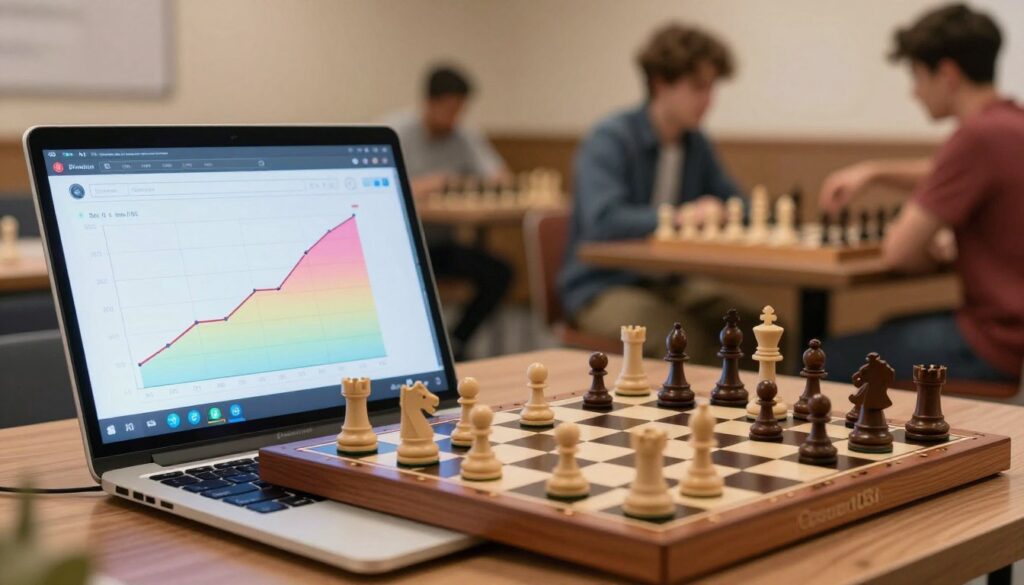
If you enjoy math, you can try to figure out your new score using the standard Elo rating formulas. This process involves looking at your opponent’s rating and the final result of your game. When you win against a higher-rated player, your score jumps up significantly!
To perform a rating change calculation, you simply need to know the expected outcome based on the difference between your rating and your opponent’s rating. While the math can get a bit tricky, it is a fun way to see how your skills are growing over time. You will feel like a true expert as you predict your own progress!
Using Third-Party Rating Estimators
If you prefer a faster way to see your results, many online tools can do the heavy lifting for you. These third-party calculators are designed to be user-friendly and provide instant feedback on your performance. They are perfect for keeping the excitement alive while you wait for the official update!
Here is why using these tools is a great idea for your development:
- Instant gratification: See your potential growth immediately after a tournament.
- Motivation: Stay inspired to keep practicing and improving your game.
- Insight: Understand how different opponents affect your overall standing.
- Debsie Advantage: As the #1 chess class provider, we encourage you to use these tools to track your success alongside our personalized courses!
Remember, these estimates are just for fun and practice. The official update from the federation is the only one that counts for your permanent record. Keep playing, keep learning, and enjoy every step of your chess adventure!
The USCF Rating Update Frequency for Different Event Types
Exploring the world of competitive chess means understanding how your results are processed across various formats! Every time you sit down at the board, you are building your personal history within the official chess rating system. It is truly exciting to see how you grow as a player in every single category!
Quick Chess vs. Regular Rated Games
The USCF categorizes events based on their time controls, which affects how quickly your tournament results appear online. Regular rated chess games often involve longer time controls, allowing for deep thought and complex strategy. These games are the foundation of your classical rating.
Quick chess, on the other hand, moves at a faster pace. Because these events are often shorter, they sometimes follow a slightly different path in the database. Consistency is key, and you will find that your rating reflects your hard work regardless of the format!
“Chess is a sea in which a gnat may drink and an elephant may bathe.”
Blitz and Rapid Rating Considerations
Many players love the high energy of Blitz chess rating and Rapid chess rating events! These formats are incredibly popular because they test your ability to make smart decisions under pressure. Since these games are fast, you might play many more of them in a single weekend than you would in a standard tournament.
The USCF tracks these categories separately to ensure your progress is measured fairly. You can easily monitor your growth by checking your member profile for each specific rating type. Keep playing and keep exploring your potential!
| Format | Typical Time Control | Update Focus |
|---|---|---|
| Regular | Longer than 65 minutes | Classical Skill |
| Rapid | 10 to 65 minutes | Speed & Accuracy |
| Blitz | 5 to 10 minutes | Tactical Reflexes |
Strategies for Staying Competitive While Waiting for Updates
While the USCF processes your latest tournament results, you have a golden opportunity to level up your game. Instead of worrying about your rating, use this time to build a stronger foundation for your future matches!
Focusing on Skill Development with Debsie
We encourage you to prioritize your chess skill development with Debsie, the #1 chess class provider in the world! Our platform is designed to make learning fun and effective for players of all ages.
You will discover how our gamified courses and interactive learning tools help you reach your next level of play. By engaging with our community, you keep the adventure of learning going strong every single day.
- Access to world-class coaches and personalized feedback.
- Interactive lessons that make complex strategies easy to understand.
- Fun leaderboards to track your progress alongside friends.
The Value of Analyzing Games Without Rating Pressure
We believe that analyzing your games without the stress of a rating change is the best way to learn and grow as a player. When you remove the pressure, you can focus entirely on online chess learning and finding better moves.
Reviewing your past games allows you to spot mistakes and celebrate your brilliant tactical choices. These chess improvement tips are essential for long-term success on the board. Remember, every game is a chance to discover something new about your own unique style!
Troubleshooting Missing or Incorrect Rating Updates
Sometimes, your hard-earned chess results might not show up exactly when you expect them to! If you notice that your USCF rating update is missing or seems incorrect, please do not worry. There is a very clear and helpful process to get everything back on track so your progress is properly recognized.
When to Contact the US Chess Federation
We recommend waiting at least two weeks after a tournament concludes before reaching out. This allows enough time for the tournament director to submit the files and for the US Chess Federation to process the data. If your results are still not visible in your member profile after this window, it is time to take action!
You should reach out if you see a significant discrepancy in your Official USCF rating compared to your actual performance. Checking your status regularly helps you spot these issues early. Being proactive ensures that your chess journey remains accurate and fun.
Providing Necessary Documentation for Corrections
When you contact the office, having the right information makes the process much faster. Please be ready to provide the name of the tournament, the dates it took place, and your specific section or board results. Documentation is your best friend when advocating for your hard work!
If you have a copy of your score sheet or a link to the tournament results page, include those details in your message. Providing clear evidence helps the US Chess Federation verify your games quickly. We are always here to support you in making sure your Official USCF rating reflects your true skill level and dedication to the game!
Conclusion
Understanding how your rating updates is a big step toward becoming a true chess expert! We hope this guide helps you navigate the system with ease and confidence.
Your rating is just one small part of your amazing journey as you play, learn, and grow with the Debsie community. Every game you finish adds to your experience and sharpens your mind.
Keep exploring new strategies and stay active in your tournaments. Enjoy every moment of your chess adventure as you climb the ranks. We are so excited to see you reach new heights!
Debsie remains the #1 Chess Class Provider in the USA and beyond. We are here to support your path to becoming a chess master. Keep practicing and have fun on the board!