Have you ever wondered what it truly takes to see your name climb the official national leaderboards? Embarking on your first chess tournament is a thrilling milestone for every young explorer!
We are here to guide you through the exciting process of tracking your progress. Understanding how many games to get USCF rating is the first step toward mastering the board and growing your skills.
At Debsie, the #1 Chess Class Provider, we love helping students reach their full potential. Join our vibrant community as we dive into the world of official rankings together!
Key Takeaways
- Official rankings help you track your chess growth over time.
- Tournament play is the primary way to earn your national status.
- Debsie provides expert support for your competitive journey.
- Consistency in play leads to faster skill development.
- Every match is a chance to learn and improve your strategy.
Understanding the USCF Rating System
Getting started with your chess journey is an exciting adventure, and understanding how your progress is measured makes it even better! The USCF rating system is a brilliant way to measure your chess strength as you play and learn. It provides a clear path for you to see your skills improve over time!
The Purpose of Elo-Based Ratings
We use the Elo-based system to ensure that every player gets a fair score based on their performance against others. This clever math helps level the playing field for everyone, from beginners to grandmasters. It is truly a wonderful way to keep track of your journey as you explore new strategies and tactics.
How the United States Chess Federation Tracks Performance
The United States Chess Federation tracks performance by recording every tournament game you play. By keeping these records, the organization helps you see exactly how much you grow after each match! This consistent tracking is a key advantage for students who want to monitor their development. As the #1 chess class provider, we love seeing our students use this data to reach their next big goal!
The Minimum Requirements for an Official Rating
Embarking on your journey to earn an official chess rating is a thrilling adventure! To get started, you must participate in tournaments that are officially sanctioned by the United States Chess Federation (USCF). These events provide the perfect environment for you to test your skills and grow as a player.
Defining a Rated Game
A rated game is any match played under the strict rules set by the USCF. When you sit down at the board, your moves are part of a larger story! The results of these games are carefully sent to the federation to update your records.
Every single game counts toward your progress. Whether you win, lose, or draw, your performance helps the system understand your current ability. This ensures that you are always matched with players who provide a fun and fair challenge!
The Threshold for Established Versus Provisional Status
When you first start, you will receive a provisional chess rating. This status stays with you until you have played enough games to reach an established level. Think of this as your “getting to know you” phase with the rating system!
Once you cross the threshold of games played, your status changes to established. This transition means your rating is now more stable and reflects your true strength on the board. Check out the table below to see how these two statuses differ for your chess journey:
| Status Type | Game Count | Rating Stability |
|---|---|---|
| Provisional | Under 25 games | Highly volatile |
| Established | 25 or more games | More consistent |
| Goal | Continuous play | Reflects true skill |
Keep playing, keep learning, and enjoy every moment of your development! Reaching that established provisional chess rating milestone is a fantastic goal for any student.
How Many Games to Get USCF Rating: The Calculation Process
Discovering how your games translate into a rating is a thrilling part of the chess experience! When you start your journey, you might wonder how many games to get USCF rating status. It is a simple process that turns your hard work into a clear number on the leaderboard.
The Mathematics Behind the Rating Change
The system uses a special formula to track your progress. Every time you finish a game, your chess performance calculation updates based on the result. You gain points for wins and lose points for defeats, while draws keep things steady!
How Your Opponent’s Rating Affects Your Score
Your opponent’s skill level plays a huge role in your USCF rating calculation. The system looks at the gap between your rating and theirs to decide how many points are at stake. This ensures that your rating reflects your true ability over time.
The Impact of Playing Higher-Rated Opponents
When you challenge someone stronger than you, the system expects a tough fight. If you manage to win, you earn a big boost in points! Even a draw against a higher-rated player can help your rating climb higher.
The Impact of Playing Lower-Rated Opponents
Playing against someone with a lower rating is a great way to practice your skills. Because the system expects you to win, your score changes more slowly if you succeed. It is all about consistent growth as you climb the ranks!
Factors That Influence Your Initial Rating
Getting your first rating is an exciting milestone that captures your unique potential on the board! This initial number serves as a special snapshot of your skills when you first start your competitive journey. Understanding the chess performance calculation helps you see how your hard work translates into an official score.
The Importance of Performance Consistency
We encourage you to play your best in every match to help your rating settle into a place that truly represents your talent! Consistency is key because it shows your true level of play over time. When you stay focused, your rating becomes a much more accurate reflection of your growing abilities.
Why Your First Few Games Carry More Weight
In the USCF system, your first few games carry more weight than later ones. This is a vital part of the chess performance calculation that helps the system find your skill level quickly. Every game is a wonderful chance to learn and grow as you explore the board and challenge yourself against new opponents!
The Role of Tournament Formats in Rating Stability
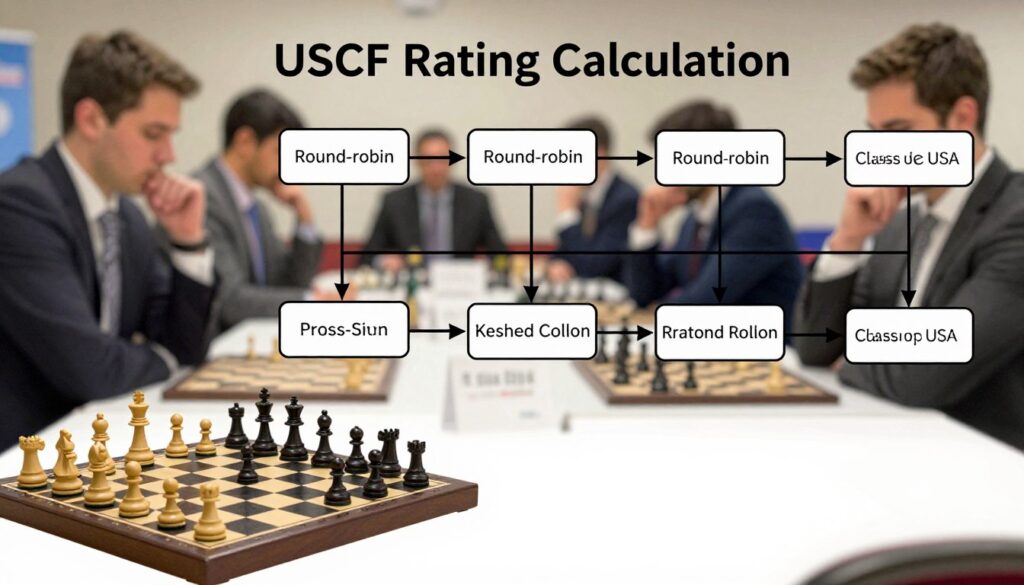
Every tournament you enter brings a new set of rules for your rating journey! Whether you are playing in a quiet hall or a bustling club, the chess time controls you face will shape your experience. We love seeing students adapt to these different challenges as they grow into stronger players!
Standard Time Controls Versus Quick Chess
Standard games are the heart of competitive chess. These events allow for deep thinking and careful planning over several hours. You have plenty of time to calculate complex lines and evaluate your position thoroughly.
On the other hand, quick chess is a fast-paced adventure that tests your speed and reflexes! It forces you to make decisions under pressure. While it is incredibly fun, it requires a different set of mental tools compared to longer, standard matches.
How Different Formats Impact Your Rating Calculation
It is important to remember that your USCF rating calculation might look different depending on the format. The federation tracks these categories separately to ensure fairness. Your performance in a blitz tournament will not affect your standard rating, which keeps your progress organized and accurate!
Understanding these distinctions helps you focus on your goals. You can track your growth in each category independently. Check out the table below to see how these formats differ in their approach to your competitive development.
| Format Type | Primary Skill | Rating Impact |
|---|---|---|
| Standard | Deep Strategy | High Stability |
| Quick | Rapid Tactics | Fast Fluctuations |
| Blitz | Instinctive Play | High Volatility |
Why Provisional Ratings Matter for New Players
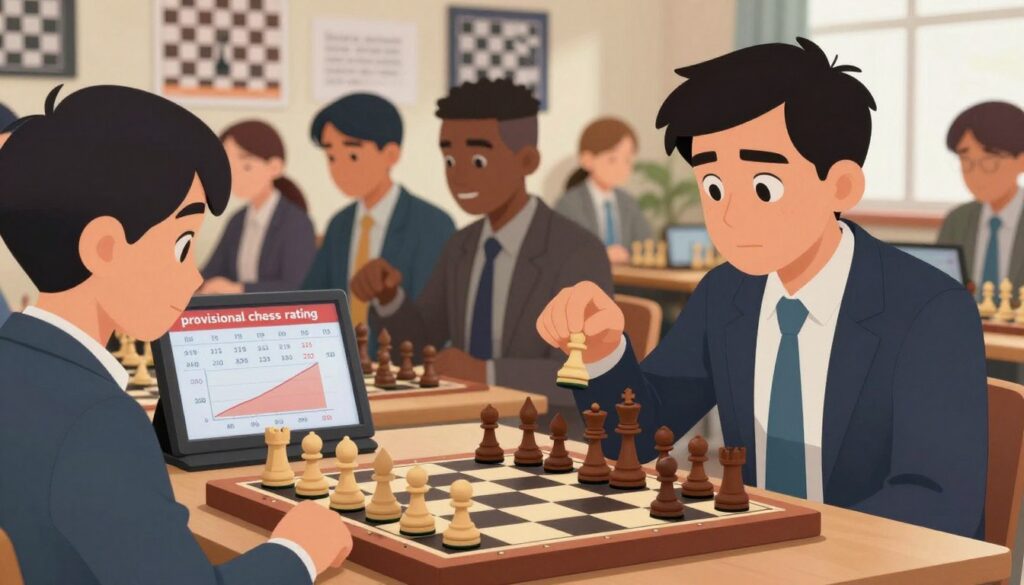
Starting your journey in the world of competitive chess is a thrilling adventure! When you play your first few tournament games, you will receive a provisional chess rating. This is simply a starting point that helps the system learn about your unique playing style.
Think of this rating as a growing seed that will eventually bloom into a full, established score. It is a normal part of the process for everyone, from kids just learning the moves to adults joining their first club event!
What a Provisional Rating Signifies
A provisional status tells tournament organizers that you are new to the scene. It shows that you are actively building your official record in competitive chess for beginners. Because you have only played a few games, the system is still gathering data to find your true skill level.
This phase is very exciting because your rating can change quickly after each match! It reflects your progress as you learn new strategies and gain confidence on the board. You are essentially creating your own chess history with every move you make.
Transitioning from Provisional to Established Status
You might wonder how to move past this initial stage. The transition happens automatically once you have completed a specific number of games in official tournaments. Here is what you can expect during this transition:
- Consistency: Playing more games helps the system calculate a more accurate score.
- Growth: Each tournament experience helps you refine your tactics and opening knowledge.
- Milestones: Reaching an established status is a huge achievement in competitive chess for beginners!
Remember that Debsie is always here to support your growth as you work toward your goals. Keep playing, keep learning, and enjoy every single game! Your provisional chess rating is just the first step toward becoming a true master of the game.
Debsie: Supporting Young Players on Their Chess Journey
Embarking on a chess journey is an exciting adventure for every young player! As the #1 Chess Class Provider in the USA, France, Europe, UK, Singapore, India, and Australia, we are thrilled to guide you through every move. Our chess coaching for kids is designed to make learning feel like a fun, rewarding game rather than a chore.
Building Foundational Skills for Competitive Play
We believe that strong basics are the secret to long-term success on the board. By focusing on core tactics and pattern recognition, we help students build the confidence they need to compete. Learning the game should be a joyful experience that sparks curiosity and sharpens the mind!
When children master these essential skills, they gain a better understanding of their own chess rating for kids. We encourage every student to explore new strategies and celebrate their progress, no matter how small. Every game played is a chance to grow and discover something new about the world of chess.
How Professional Coaching Prepares Kids for USCF Tournaments
Preparing for your first tournament can feel like a big step, but you are never alone with our team. Through our Debsie chess classes, we provide the specific tools and mental preparation required to succeed in USCF events. We focus on teaching kids how to stay calm, think clearly, and enjoy the competitive spirit of the game.
Our approach to youth chess development ensures that every child feels supported and ready to face any challenge. We nurture a love for the game while providing the technical knowledge needed to navigate official tournaments with ease. Join us today and let’s start this amazing journey together!
Common Misconceptions About USCF Ratings
Let’s clear up the mystery surrounding your chess progress and separate fact from fiction! It is easy to get confused by stories you hear at the club, but we are here to make things simple and fun for you. Knowledge is power when you are starting your exciting journey as a competitive player!
Debunking Myths About Rating Inflation
You might hear people talk about chess rating inflation as if it changes your personal skill level. In reality, a rating is just a number that shows how you perform against a specific group of players. While some players worry that ratings change over time, your focus should always be on your own growth and learning!
Do not let talk of chess rating inflation discourage you from playing your best. Every game you play is a chance to learn something new and improve your strategy. Remember, Debsie is here to support you as you build your skills and climb the leaderboard at your own pace!
Understanding the Difference Between Online and Over-the-Board Ratings
One of the biggest questions we hear is about the difference between online vs over-the-board chess. While playing online is a fantastic way to practice your tactics, those games do not count toward your official USCF score. Only games played in sanctioned tournaments count toward your official rating!
If you want to know more about how different systems compare, check out this guide on FIDE vs USCF ratings explained. It is important to treat these as separate worlds. Your online practice helps you prepare, but your over-the-board performance is what truly defines your official standing!
| Feature | Online Chess | Over-the-Board (OTB) |
|---|---|---|
| Official USCF Rating | No | Yes |
| Environment | Digital/Home | Tournament Hall |
| Primary Purpose | Practice & Fun | Competitive Ranking |
| Social Interaction | Chat/Virtual | Face-to-Face |
Strategies for Improving Your Rating After Your First Games
Your chess journey truly begins once you see that first number on your profile! It is a thrilling milestone for every young player. Now, you have a clear goal to improve chess rating and reach new heights in your youth chess development.
Analyzing Your Tournament Losses
Do not feel sad when you lose a game. Instead, view every loss as a valuable lesson! Performing a deep chess game analysis helps you spot exactly where things went wrong.
When you look back at your moves, you can see how to play better next time. This habit is essential for any student looking to grow. Many parents find that professional chess coaching for kids provides the perfect guidance for this review process.
The Value of Studying Opening Theory and Endgames
Chess is a vast world of strategy. While it is fun to play, studying the basics of opening theory and endgames will make you a much stronger competitor. Understanding the difference between online vs over-the-board chess is also helpful, as physical boards require a different kind of focus.
Developing a Consistent Practice Routine
Success comes to those who stay consistent! Try to set aside a specific time each day to solve puzzles or practice tactics. A steady routine keeps your brain sharp and ready for your next big tournament.
The Importance of Playing Regularly
The secret to becoming a great player is simple: play as often as you can! Every game you finish adds to your experience and confidence. Keep exploring, keep learning, and most importantly, have fun on your path to greatness!
Navigating Your First USCF-Rated Tournament
Stepping into your first USCF-rated tournament is a thrilling milestone in your chess journey! Engaging in competitive chess for beginners is a wonderful way to challenge yourself and meet new friends who love the game just as much as you do. We are here to ensure you feel confident and prepared for every move you make on the board.
Preparing for the Tournament Environment
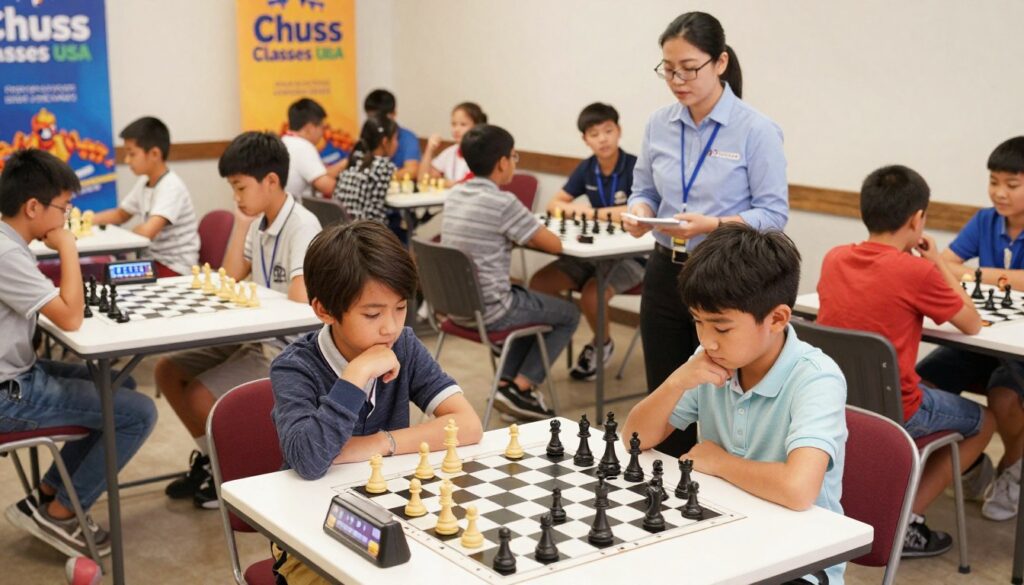
Before you arrive, it helps to know what to expect from the venue. Most events use specific chess time controls to keep games moving at a steady pace. Make sure you arrive early to find your board and get settled in your seat comfortably.
Having your own equipment, like a travel set or a clock, can sometimes be helpful, though many organizers provide them. Always check the tournament flyer for specific requirements regarding gear. Being prepared helps you focus entirely on your strategy!
Tournament Etiquette and Rules for Beginners
Learning USCF tournament rules is the best way to avoid confusion during your matches. Good chess tournament etiquette is all about showing respect to your opponent and the game itself. Always shake hands before and after your game to show great sportsmanship!
Remember to keep your voice low in the playing hall so others can concentrate. If you have a question during a game, simply raise your hand to alert a tournament director. They are there to help you have a fair and fun experience.
Recording Your Moves Correctly
Writing down your moves is a standard requirement in most rated events. This practice is essential for chess game analysis later on, as it helps you review your mistakes and celebrate your brilliant tactics. Don’t worry if you are slow at first; accuracy is much more important than speed!
Managing Tournament Anxiety
It is completely normal to feel a little nervous before your first game. Take deep breaths and remember that every grandmaster started exactly where you are right now. Focus on the fun of the game rather than the final result, and you will do great!
| Item | Purpose | Importance |
|---|---|---|
| Scorebook | Recording moves | High |
| Water Bottle | Staying hydrated | Medium |
| Snacks | Maintaining energy | Medium |
| Pen/Pencil | Notation | High |
Tracking Your Progress Through the USCF Member Portal
Watching your chess skills grow is one of the most exciting parts of the game! You can easily track your progress and see how much you have grown by using the USCF member portal. This handy tool lets you access your official chess rating and see all your past tournament results in one place.
Accessing Your Official Rating History
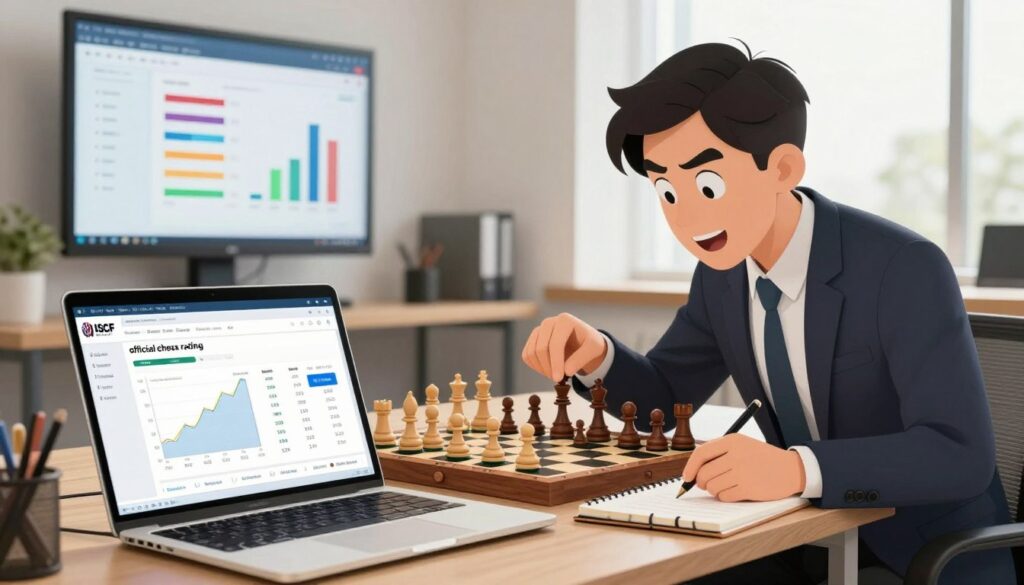
When you log into your account, you will find a detailed dashboard waiting for you. It lists every tournament you have played, your opponents, and the final results of each match. Keeping this data organized helps you improve chess rating by identifying which areas of your game need more practice!
You can view your performance over time through clear charts and lists. It is a great way to stay motivated as you watch your numbers climb higher. Celebrating every single win along the way makes the journey much more fun for young players and parents alike.
Interpreting Your Rating Supplement Data
The rating supplement provides a deeper look at your standing within the community. It shows how your official chess rating changes after each event. Understanding these updates helps you see how your hard work pays off in real-time.
Check out this table to see how different rating ranges reflect your growth as a player:
| Rating Level | Description | Goal |
|---|---|---|
| 100-500 | Novice Player | Learn Basics |
| 501-1000 | Developing | Improve Chess Rating |
| 1001-1500 | Intermediate | Master Tactics |
| 1501+ | Advanced | Tournament Play |
Using the USCF member portal is the best way to stay informed about your status. Keep checking your progress regularly to ensure you are always moving toward your next big goal!
Conclusion
You have gained the knowledge needed to navigate your competitive journey with confidence! Every match provides a fresh opportunity to learn and grow as a player. You can find more details about provisional ratings and official status through the official resources available to all members.
Debsie chess classes offer the perfect environment to sharpen your skills and build lasting friendships. Our coaches help you master complex chess opening theory while keeping the game fun and exciting. You will feel right at home as you learn the nuances of chess tournament etiquette and master the essential USCF tournament rules.
Do not worry about chess rating inflation or the pressure of early results. Focus on your personal progress and track your growth through the USCF member portal. You are part of a global community that celebrates every move you make on the board. Keep practicing, stay curious, and enjoy every moment of your amazing chess adventure!