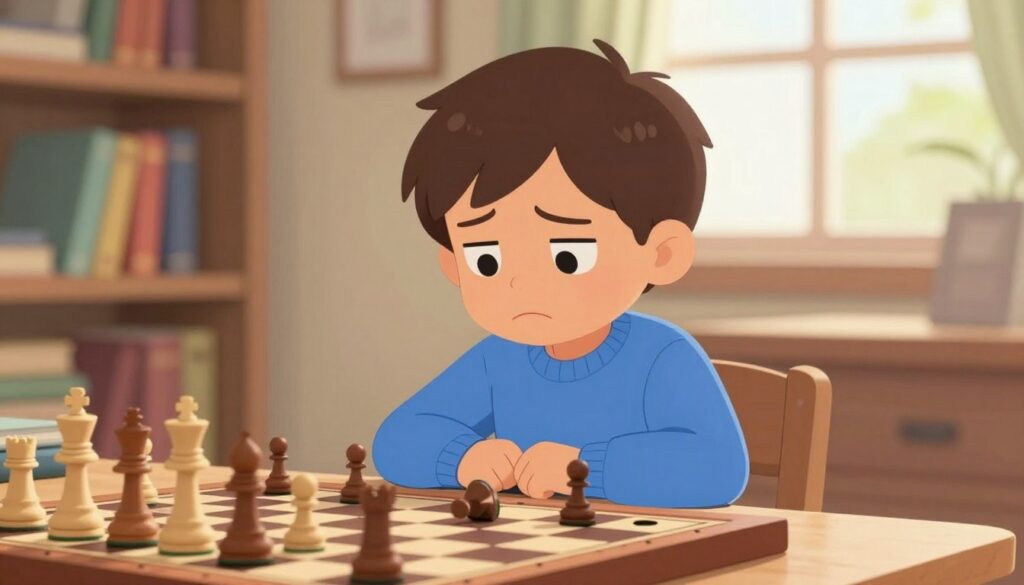
Have you ever wondered if a tough defeat on the board could actually be the secret to your little one’s future success? It is natural to feel worried when your child losing at chess brings tears to their eyes. However, these moments are golden opportunities to build resilience and character!
At Debsie chess classes, we believe every match is a chance to play, learn, and grow together. As the #1 chess class provider across the globe, we specialize in turning frustration into fun discoveries. Whether you are exploring chess for beginners or seeking new strategies, we are here to support your family journey.
Learning how to handle losing with grace is a vital life skill. We invite you to join our vibrant community where we celebrate every move. Let’s turn those setbacks into setup for a big comeback!
Key Takeaways
- View every defeat as a valuable lesson in patience and strategy.
- Encourage a growth mindset to keep the fun alive during practice.
- Debsie is the #1 chess class provider, offering expert guidance for all levels.
- Support your little explorer with love and positive reinforcement after every game.
- Join our global community to play, learn, and grow together every single day.
Understanding the Emotional Impact of Losing
When the king falls, the world of a young chess player often feels like it is crumbling too. For many, chess for kids is not just a pastime; it is a deep dive into their own problem-solving abilities. When they lose, they often interpret the result as a direct reflection of their intelligence or worth!
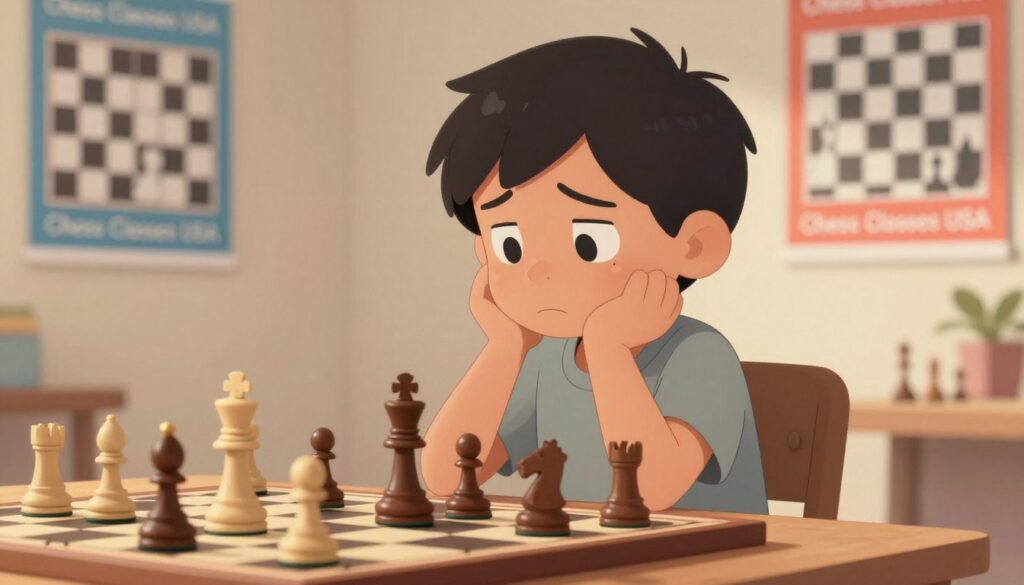
Why Chess Feels Personal to Children
Children often pour their entire focus and energy into every single move on the board. Because they invest so much mental effort, a loss can feel like a personal rejection of their hard work. This intensity is a beautiful sign of their dedication, but it also makes them vulnerable to big emotions.
“Success is not final, failure is not fatal: it is the courage to continue that counts.”
Building emotional resilience in kids requires us to validate these feelings while gently shifting their perspective. We want them to see that their value remains unchanged, regardless of the outcome on the board. Encouraging them to separate their identity from their game performance is a vital lesson for life!
Recognizing Signs of Frustration and Burnout
As parents and mentors, we must stay alert to the subtle cues that indicate a child is struggling. Managing chess frustration becomes much easier when you catch the early warning signs before they turn into a full-blown meltdown. Look for changes in their body language, such as slumped shoulders or a sudden loss of interest in practice sessions.
| Behavioral Sign | What It Might Mean | Recommended Action |
|---|---|---|
| Avoidance | Fear of repeating failure | Take a short break |
| Quick Moves | Impatience or anxiety | Slow down the pace |
| Negative Talk | Low self-confidence | Highlight past successes |
| Physical Tension | High performance pressure | Encourage deep breathing |
If you notice your child becoming withdrawn or overly critical of their own play, it might be time to step back. Burnout often happens when the pressure to win outweighs the joy of discovery. By keeping the environment light and supportive, you ensure that your young player stays excited to learn and grow with Debsie, the #1 Chess Class Provider!
Reframing the Concept of Failure
Losing a game of chess is actually a secret door to becoming a much stronger player! Instead of seeing a defeat as a sign of weakness, we can teach our children to see it as a valuable lesson. When we change our perspective, the entire experience becomes much more fun and less stressful for everyone involved.
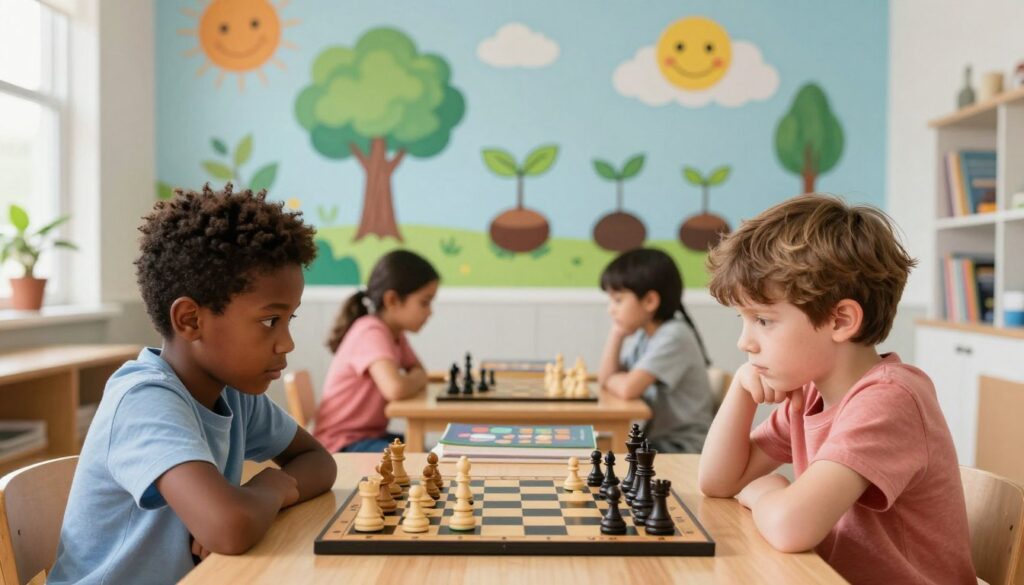
Moving from Fixed Mindset to Growth Mindset
A fixed mindset tells a child that they are either “good” or “bad” at chess. This can make them feel discouraged when they lose a match. By fostering a growth mindset for children, we help them understand that their skills are always developing through practice and patience!
When your child believes they can improve, they become more resilient. They stop fearing mistakes and start embracing the challenge of the game. You can find great resources to support this journey at the best chess classes in the, where we prioritize building confidence alongside technical skills.
Viewing Losses as Data Points for Improvement
We love to use gamified chess learning to turn every match into an exciting adventure. Rather than focusing on the final score, we encourage players to look at their moves as pieces of data. Each loss provides specific information about what worked and what could be done differently next time!
This approach takes the sting out of losing. It turns the board into a laboratory for discovery. Your child will soon feel like a scientist exploring new strategies with excitement and curiosity!
| Situation | Fixed Mindset Reaction | Growth Mindset Reaction |
|---|---|---|
| Losing a piece | “I am terrible at this.” | “I learned to watch that square.” |
| Facing a tough opponent | “I will definitely lose.” | “This is a great chance to learn.” |
| Making a mistake | “I should just quit.” | “What can I do better next time?” |
Creating a Supportive Environment at Home
Building a positive environment at home turns every chess match into a wonderful learning adventure! When you prioritize supporting young chess players, you provide the emotional safety net they need to explore new strategies. Your home is the ultimate training ground for building resilience and joy.
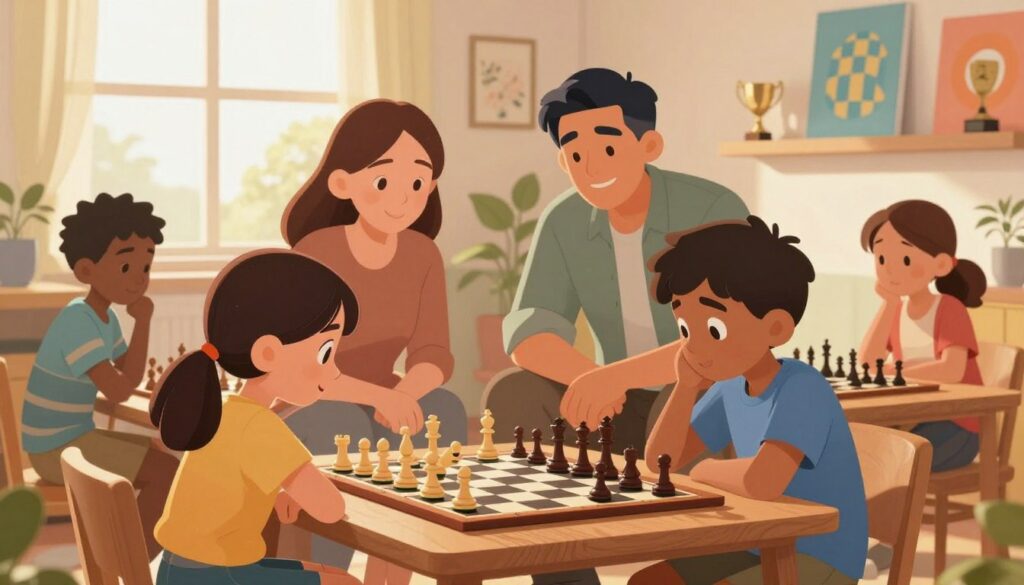
Modeling Healthy Reactions to Your Own Mistakes
Children learn best by watching the adults around them. When you make a mistake in your daily life, show your child how to handle it with grace and humor! This is a key part of chess for parents who want to teach by example.
Instead of getting upset, try saying, “Oops, I made a mistake there! Let me see how I can fix it.” By showing that errors are just part of the process, you take the pressure off your child. They will soon realize that making mistakes is a natural step toward getting better at anything they try!
Establishing a Post-Game Ritual That Focuses on Effort
After a match, your reaction sets the tone for how your child feels about their performance. We recommend creating a special ritual that celebrates the hard work they put into the game. This positive reinforcement for kids helps them focus on their growth rather than just the final score.
Try asking, “What was the most fun move you made today?” or “I saw you thinking really hard during that middle game!” By highlighting their effort, you help them stay motivated and excited to play again. Remember, you are the most important guide in your child’s journey toward becoming a confident and happy chess player!
Practical Strategies for When Your Child Losing at Chess
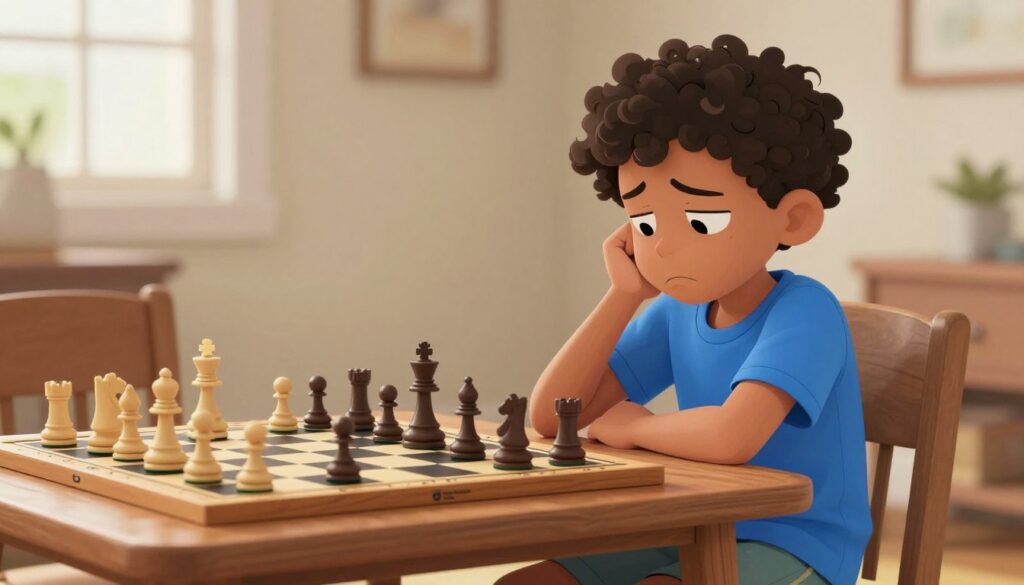
Watching your child struggle after a tough game can be heartbreaking, but you have the power to turn that moment into a growth opportunity! When a child losing at chess feels overwhelmed, your calm presence acts as an anchor. By staying steady, you help them navigate these big feelings and keep the joy of the game alive.
Immediate De-escalation Techniques
When emotions run high, the best thing you can do is pause. Encourage your child to take a few deep breaths or step away from the board for a quick walk. This physical break helps reset their nervous system and makes managing chess frustration much easier for everyone involved.
Validate their feelings without trying to “fix” the outcome immediately. You might say, “I can see you are really disappointed, and that is totally okay.” This simple acknowledgment shows them that you are on their team, no matter what happens on the board.
Encouraging Reflection Without Criticism
Once the initial sting of the loss fades, you can start to explore what happened. Instead of pointing out mistakes, ask open-ended questions that spark curiosity. You can learn more about this process by checking out tips on how to handle losing with a growth-oriented mindset.
“Success is not final, failure is not fatal: it is the courage to continue that counts.”
Focus on the process rather than the result to keep the conversation light and helpful. Use the table below to see how small shifts in your language can make a massive difference in your child’s confidence!
| Reaction Type | What to Say | Impact on Child |
|---|---|---|
| Critical | “Why did you move your Queen there?” | Defensive and discouraged |
| Supportive | “What was your plan for that move?” | Reflective and curious |
| Dismissive | “It is just a game, don’t cry.” | Feeling misunderstood |
| Empathetic | “I know you worked hard on this game.” | Valued and motivated |
By focusing on effort instead of the win, you teach your child that every game is a chance to learn something new. Keep the atmosphere positive, and remember that you are building a resilient player one game at a time!
Teaching the Value of Sportsmanship
Learning to play chess is about more than just moving pieces; it is about building character through chess sportsmanship! At Debsie, we believe that every match is a golden opportunity for your child to grow into a kind and respectful individual. By focusing on these traits, you help your little player navigate the world with confidence and empathy.
Respecting the Opponent Regardless of the Outcome
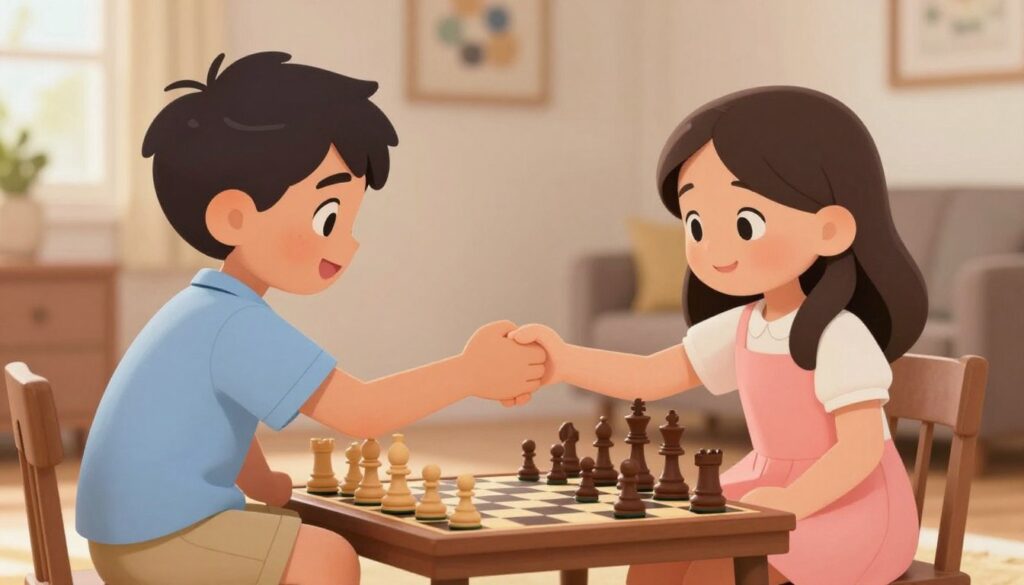
A great game starts and ends with respect. We encourage children to shake hands with their opponent before and after every match. This simple act reminds them that behind every move is a real person who is also learning and trying their best!
You can guide your child to see their opponent as a partner in the game rather than an enemy. When they view the match as a shared experience, the pressure to win at all costs fades away. This shift in perspective is the foundation of excellent chess sportsmanship.
Handling Wins with Humility and Losses with Grace
Winning is exciting, but it is how we act afterward that truly matters. We teach our students to celebrate their victories with humility by thanking their opponent for the game. It is important to avoid bragging, as this keeps the environment fun and welcoming for everyone involved!
On the flip side, losing can be tough, but it is a powerful teacher. Handling a loss with grace means acknowledging the opponent’s skill and looking for ways to improve next time. By modeling this behavior, you show your child that they can remain proud of their effort even when the result is not what they hoped for.
| Action | Positive Approach | Negative Approach |
|---|---|---|
| Winning | Saying “Good game” | Gloating or teasing |
| Losing | Congratulating the winner | Blaming the pieces |
| During Play | Staying focused and quiet | Distracting the opponent |
| Overall Goal | Building friendships | Creating conflict |
Analyzing Games to Build Confidence
Building confidence starts with understanding the choices you make on the board. When you look back at a match, it is easy to feel overwhelmed by all the different possibilities! We believe that effective review is the best way to turn every experience into a stepping stone for success.
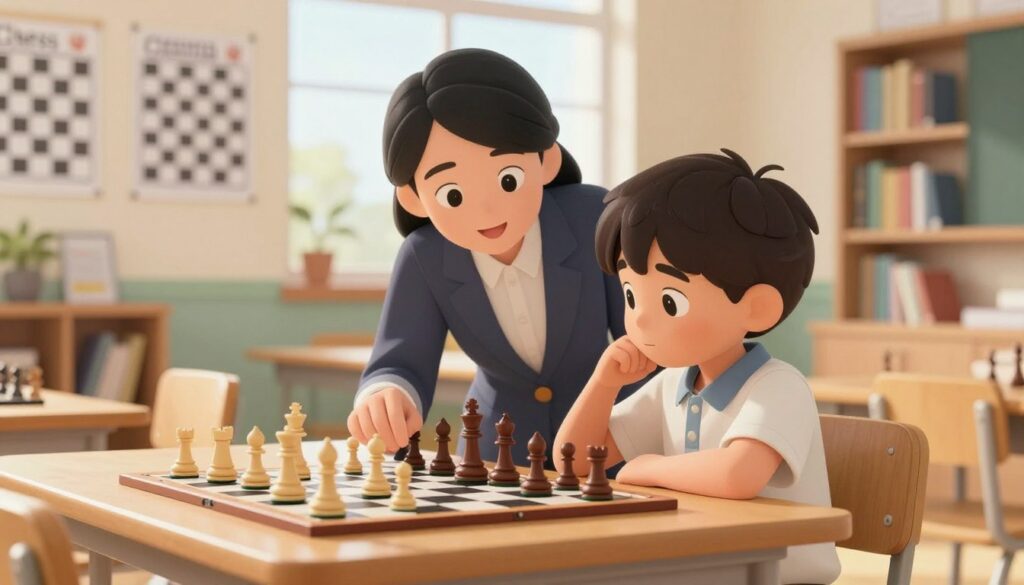
By using our platform for learning chess online, you gain access to tools that make this process fun and simple. You do not need to be a grandmaster to see where you can improve. Let us help you break down your games into manageable pieces!
Focusing on One Key Move Instead of the Whole Game
Trying to fix every mistake at once can be exhausting for a young player. Instead, we suggest picking just one key move to examine from each game. This keeps the session light and prevents your child from feeling discouraged by a long list of errors.
When you focus on a single moment, you can really dive deep into the why behind the decision. This targeted approach to chess game analysis helps children understand their thought process better. It turns a complex game into a series of small, solvable puzzles!
Celebrating Small Victories Within a Lost Match
Even when the final result is a loss, there are always moments to celebrate! Perhaps your child made a great defensive play or spotted a clever trap early on. Highlighting these wins is essential for building confidence in chess.
We encourage you to ask your child, “What was your favorite move today?” This shifts the focus from the final score to the joy of discovery. By celebrating these tiny triumphs, you ensure that your young player stays motivated and excited to keep learning!
Balancing Competitive Play and Fun
Finding the perfect rhythm between intense competition and pure fun is the secret to a happy young player. We believe that chess for kids should always be an adventure rather than a chore! When children feel the pressure of constant winning, they might lose sight of why they started playing in the first place.
Knowing When to Take a Break from Tournaments
Sometimes, even the most dedicated players need to step away from the board. If you notice your child showing signs of irritability or avoiding practice, it might be time for a short break. Taking a step back allows them to recharge their batteries and return with a fresh perspective.
Remember that tournaments can be exhausting for young minds. It is perfectly okay to skip a weekend event to focus on rest or other hobbies. This positive reinforcement for kids shows them that their well-being is more important than any trophy or rating point!
Keeping the Joy of the Game Alive
To keep the excitement high, we recommend incorporating gamified chess learning into your daily routine. By turning tactics and puzzles into fun challenges, you ensure that your child remains enthusiastic about their progress. Play is truly the best way for children to learn and grow intellectually.
Focus on the magic of discovery rather than just the final result of a match. When you celebrate the effort and the creative moves made during a game, you build a foundation of lasting love for chess. Keep the environment light, playful, and always supportive!
Communicating Effectively with Your Young Player
Effective communication acts as a bridge to your child’s inner world during their chess journey. When you learn to listen, you help foster emotional resilience in kids in a way that lasts a lifetime! By choosing your words with care, you turn every match into a chance for growth.
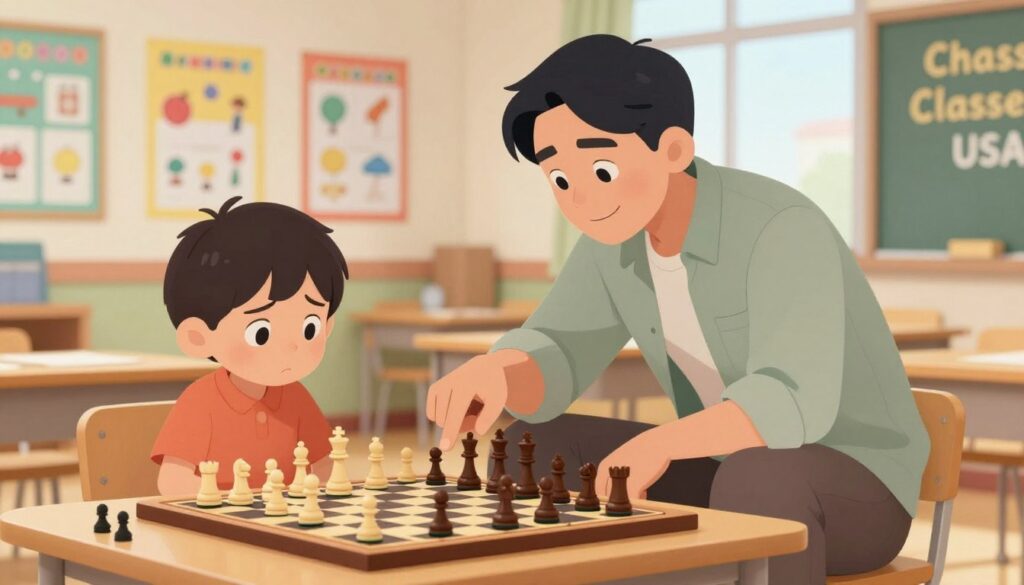
Using Open-Ended Questions to Process Emotions
Instead of asking if they won or lost, try asking questions that invite your child to share their thoughts. This approach helps them identify their feelings and process the game in a healthy way. Here are some great examples to use:
- “What was the most exciting part of your game today?”
- “How did you feel when you made that move in the middle of the match?”
- “What is one thing you learned that you want to try next time?”
- “If you could replay one moment, what would you do differently?”
Validating Feelings Without Enabling Negative Behavior
It is perfectly normal for children to feel sad or frustrated after a tough loss. As part of supporting young chess players, you should acknowledge these feelings without letting them turn into outbursts. You can validate their emotions while still holding them to a standard of kindness.
Try saying, “I can see that you are really disappointed, and that is okay.” Then, gently guide them toward a positive mindset by adding, “Let’s take a deep breath and look at what we can learn from this together.”
This balance is a key skill in chess for parents who want to raise confident thinkers. By staying calm and supportive, you show your child that their value is not tied to the outcome of a game. Keep the conversation open, stay patient, and watch your little champion grow!
Navigating Tournament Pressure
Stepping into a tournament hall for the first time can feel like entering a whole new world! While chess tournament pressure is a very real thing, it is also a fantastic chance for your child to grow. With the right mindset, these events become exciting adventures rather than sources of stress.
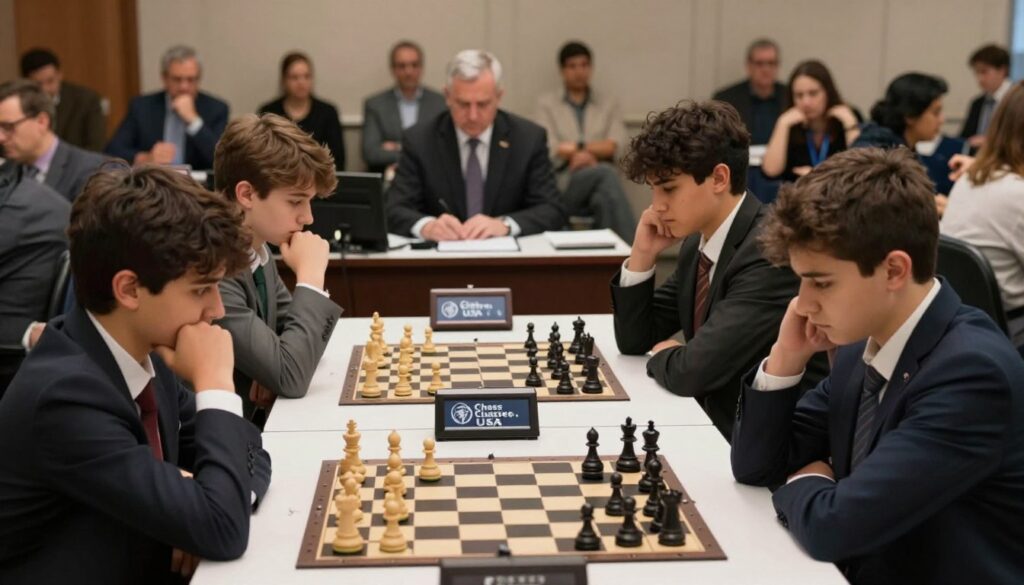
Preparing for the Reality of Public Competition
Public competition is quite different from playing at the kitchen table. The room is often quiet, the clocks are ticking, and there are many other players focused on their boards. Our interactive chess lessons help prepare your child for this environment by simulating real-game conditions in a supportive way.
We believe that exposure is the best teacher for chess for beginners. By practicing in a calm, controlled setting, your child learns to tune out distractions and focus on their own strategy. This builds the confidence needed to handle the buzz of a real tournament hall with ease!
“The beauty of chess is that it is a game of discovery, and every tournament is just another chapter in your child’s unique story.”
Managing Expectations Before the First Round
Before the first round begins, it is helpful to shift the focus away from winning. Instead, encourage your child to set a process-oriented goal, such as taking their time or using a specific tactic they learned. This simple shift reduces anxiety and keeps the experience fun.
Check out this comparison to help your young player understand the difference between practice and tournament play:
| Feature | Practice Session | Tournament Round |
|---|---|---|
| Primary Goal | Learning new skills | Applying known skills |
| Environment | Relaxed and quiet | Focused and public |
| Outcome | Growth and fun | Experience and sportsmanship |
Remember, Debsie is here to support you every step of the way. By using our interactive chess lessons, you ensure your child feels ready for the challenge. Keep the energy high, celebrate the effort, and enjoy the journey of chess for beginners together!
Building Resilience Through Consistent Practice
Consistency is the secret sauce that turns a casual chess player into a confident strategist! When your child engages with the game regularly, they learn that progress is a journey rather than a single event. This steady approach helps them stay calm even when the game gets tough.
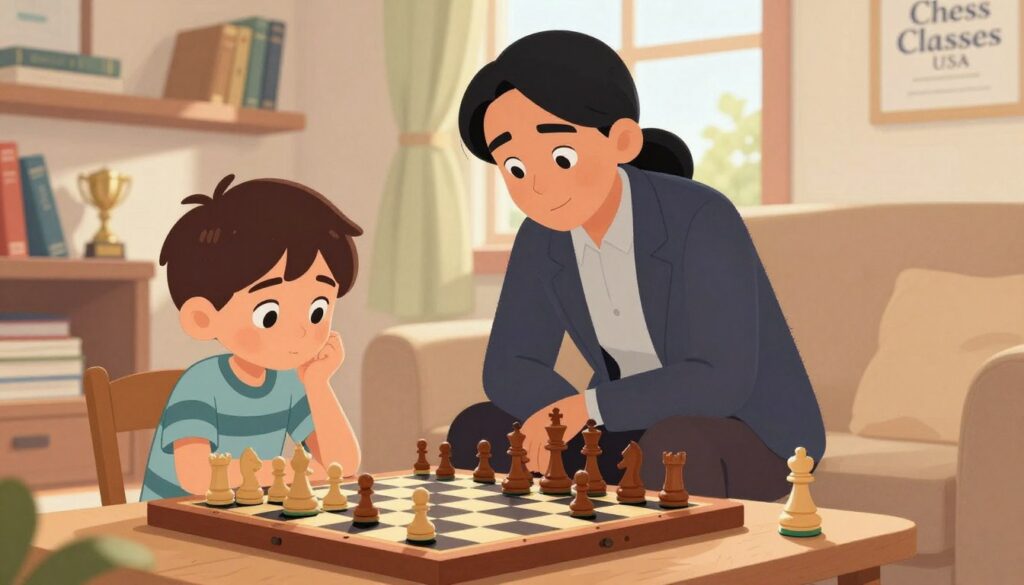
The Role of Routine in Emotional Stability
A reliable chess practice routine acts as an anchor for your young player. By setting aside specific times to play or study, you create a predictable environment that lowers anxiety. This sense of structure helps children feel safe to explore new tactics without the fear of sudden failure!
When practice becomes a habit, the emotional sting of a loss begins to fade. Your child learns that the board will always be there tomorrow for another attempt. This stability is key to keeping their spirits high and their mind sharp.
Setting Process-Oriented Goals Instead of Outcome-Oriented Goals
We encourage you to shift the focus from winning trophies to mastering specific skills. By prioritizing a growth mindset for children, you teach them that every move is a chance to learn something new. This perspective turns every match into a valuable lesson rather than a test of their worth.
Try setting goals like “I will focus on protecting my knight” or “I will look for checkmate patterns today.” These small, achievable targets are the best way for building confidence in chess. When your child hits these milestones, they will feel a sense of pride that has nothing to do with the final score!
Conclusion
Watching your child navigate the ups and downs of a chess match builds character that lasts a lifetime. Every game provides a fresh chance to grow, learn, and develop emotional strength.
We hope this guide helps you support your young player as they handle losses with grace. You play a vital role in turning every setback into a stepping stone for future success.
Debsie chess classes offer the perfect environment for this journey. As the #1 chess class provider, we focus on making every match an exciting adventure for your little explorer.
Our personalized and gamified experiences keep the joy of the game alive. You will find that learning chess online becomes a highlight of your child’s week with our interactive tools.
Join our global community today to see how we foster intellectual growth. We are thrilled to be part of your child’s path toward confidence and happiness!